

- Home
- Services
- Automated Translation
- TECHVED AI
- Case studies
- CLIENTS
- More

Let's get started
We believe in advancing your business growth with innovative ideations and strategies
Get In Touch


 Back
BackHow To Create automated usability test scripts with chatGPT
#chatGPT, #usabilitytesting, #userresearch

Jay Anthony
23 February 2023 | 8 min read
Using AI to Write Usability Test Task Scripts
Usability testing is an essential part of the product development process. It helps organizations to understand how users interact with their products and identify areas of improvement. One of the critical aspects of usability testing is writing task scripts, which outline the tasks that participants must complete during the test. Writing task scripts can be time-consuming and challenging, especially when testing multiple products or services.
Recently, Artificial Intelligence (AI) has been gaining traction as a tool to help streamline the task script writing process. AI-powered tools like OpenAI's ChatGPT can be used to automate the creation of task scripts, saving time and reducing the effort required to create them.
In this blog, we'll explore how AI can be used to write usability test task scripts and the benefits of using this technology.
How to Use OpenAI's ChatGPT to Write Your Usability Test Script
ChatGPT, a large language model developed by OpenAI, is a tool that can be used to generate test scripts for usability testing. In the following lines, we'll take a closer look at how ChatGPT can be used to write test scripts, what works well about its test scripts, and some common problems you may encounter. By the end of this guide, you'll have a better understanding of how to use ChatGPT to write your usability test script and how to get the best results.
What is ChatGPT?
ChatGPT is an AI-powered language model that can generate text based on a prompt. It was developed by OpenAI and is designed to be used for a variety of natural language processing tasks, including writing. In the user experience testing, it can be used to write scripts for usability testing, which involves evaluating the functionality, ease of use, and overall user experience of a website, mobile app, or other digital product.
Best Wording for Generating Your AI Task Script
When using ChatGPT to write your usability test script, it is important to use clear, concise, and descriptive language. This will help ensure that your script accurately reflects the goals and objectives of your test and that the results are meaningful and actionable. When writing your prompt, it is also important to consider the target customer and their needs and behaviors, as these will be important factors in the success of your test.
Using ChatGPT to Write a Test Plan
Using ChatGPT to write your usability test script is simple. You simply need to provide the model with a prompt that outlines the goals and objectives of your test, and ChatGPT will generate a script based on your prompt. You can then review and edit the script as needed to ensure that it accurately reflects the goals of your test and that the tasks are well-defined and clear.
What Works Well About ChatGPT’s Test Scripts
ChatGPT's test scripts are well-structured and easy to understand, making them ideal for usability testing. The model is able to generate clear, concise, and descriptive language, which makes it easier for test participants to understand the tasks and for testers to analyze the results. Additionally, because ChatGPT is an AI model, it is able to generate test scripts quickly and efficiently, allowing you to get your test up and running faster.
The Benefits of Using ChatGPT for Usability Test Task Scripts
Increased Efficiency
The manual process of writing task scripts can be time-consuming and repetitive. AI-powered tools can automate this process, reducing the time and effort required to create task scripts. This increased efficiency means that organizations can perform more usability tests in less time, leading to a better understanding of user behavior and a faster product development process.
Improved Consistency
Writing task scripts manually can lead to inconsistencies in language, format, and content. AI-powered tools can standardize the process of creating task scripts, ensuring that all scripts are consistent in terms of language, format, and content. This improves the overall quality of usability tests and ensures that results are reliable and comparable across different tests.
Enhanced Customization
AI-powered tools like ChatGPT can be customized to meet the specific needs of organizations. For example, the tool can be trained to write task scripts in a particular style or format, or to include specific content or language. This customization helps organizations to tailor their usability tests to their specific products and services and ensures that the results are relevant and actionable.
How to Use AI to Write Usability Test Task Scripts
1. Choose an AI-Powered Tool
The first step in using AI to write usability test task scripts is to choose an appropriate tool. There are several AI-powered tools available, including OpenAI's ChatGPT, that can be used to automate the process of writing task scripts. When choosing an AI-powered tool, it's essential to consider factors such as the tool's accuracy, speed, and customization options.
2. Provide Input Data
Once you have chosen an AI-powered tool, the next step is to provide it with input data. This input data could include existing task scripts, product specifications, or other relevant information. The more information you provide to the tool, the better it will be able to generate task scripts that are tailored to your specific needs.
3. Customize the Tool
After providing input data, it's time to customize the AI-powered tool to meet your specific needs. This could include training the tool to write task scripts in a particular style or format, or to include specific content or language. The customization process will vary depending on the tool you choose, so it's essential to consult the tool's documentation or support team for guidance.
4. Generate Task Scripts
Once you have customized the AI-powered tool, it's time to generate task scripts. The tool will use the input data and customization options to create task scripts that are tailored to your specific needs. These task scripts can then be reviewed and edited as needed.
Common Problems with ChatGPT-Generated User Testing Scripts
While ChatGPT's test scripts are generally well-structured and clear, there are some common problems that you may encounter. For example, the model may generate tasks that are too complex or difficult to complete, or it may not accurately reflect the target customer and their needs and behaviors. Additionally, the model may generate tasks that are not well-defined or that are unclear, making it difficult for test participants to complete the tasks and for testers to analyze the results.
Conclusion
AI-powered tools like OpenAI's ChatGPT offer a powerful solution for automating the process of writing usability test task scripts. By using AI, organizations and UX researchers can save time and effort, improve consistency, and enhance customization. AI-powered tools can be customized to meet specific needs and generate task scripts that are tailored to the organization's products and services.
Usability testing is an essential part of the product development process and requires writing task scripts to outline the tasks participants must complete.AI-powered tools like OpenAI's ChatGPT can automate the process of writing task scripts, leading to increased efficiency, improved consistency, and enhanced customization.The process of using AI to write usability test task scripts includes choosing an AI-powered tool, providing input data, customizing the tool, and generating task scripts.
FAQs
Can usability testing be automated?
No, usability testing cannot be fully automated as it requires evaluating the user's experience, which is subjective and cannot be accurately measured by a machine. Automated tools can aid in some aspects of usability testing, such as collecting data and detecting design issues, but human input is still necessary for a comprehensive evaluation.
Can you automate UAT testing?
Yes, UAT (User Acceptance Testing) can be automated to some extent, but it is important to note that the goal of UAT is to assess whether the software meets the needs and expectations of the end-user. Automated testing can be used to validate functional requirements, but it cannot replace the human judgment and decision-making required in UAT.
Can AI replace testers?
No, AI cannot replace testers as testing requires human intuition, creativity, and critical thinking that cannot be fully replicated by a machine. AI can aid testers in performing repetitive tasks, finding bugs, and generating test cases, but it cannot replace the human judgment and experience that are necessary for effective testing.
What are the benefits of AI in testing?
The use of AI in testing can provide several benefits, including increased efficiency and accuracy, faster test execution, and improved collaboration between developers and testers. AI can also identify potential problems earlier in the development process, leading to faster resolution and reduced overall costs.
What are the two parts to AI testing?
The two parts to AI testing are Model-Based Testing and AI-Driven Testing. Model-Based Testing involves creating a model of the system and using it to automatically generate test cases. AI-Driven Testing involves using machine learning algorithms to analyze test data and identify areas of risk in the application. Both approaches aim to increase the efficiency and effectiveness of testing.
Most Popular
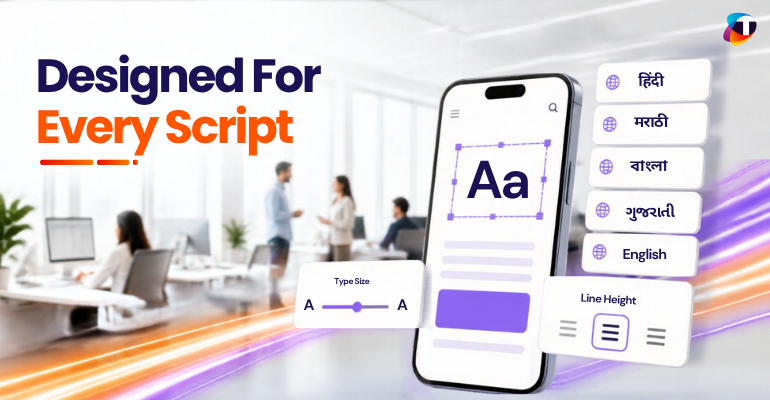
Multilingual UX for Indic Scripts: Where Regional Language Products Quietly Break

Data-Driven Decision-Making: The Overlooked Foundation of Digital Transformation
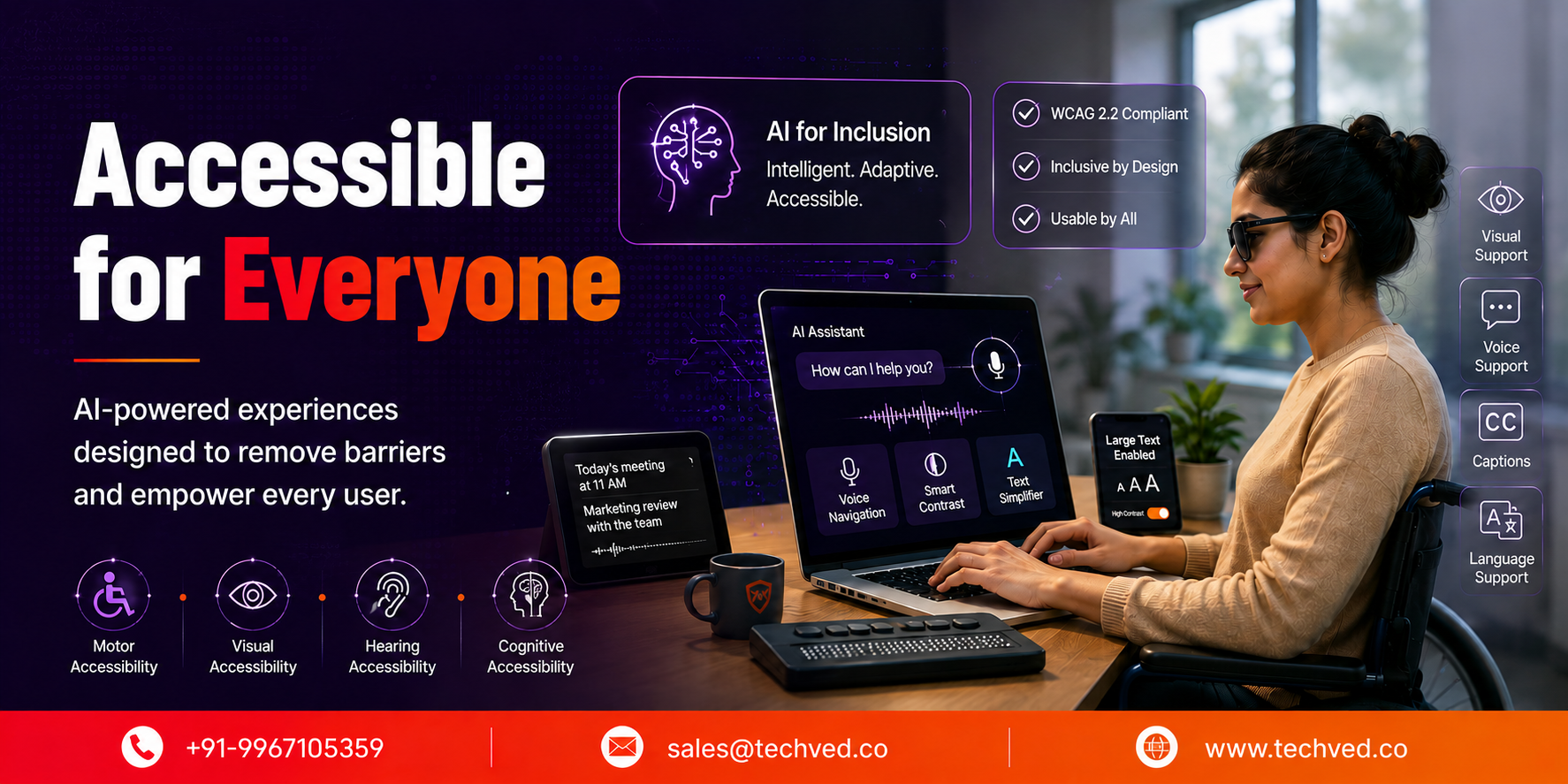
Accessibility in the Age of AI: Designing Inclusive Intelligent Experiences

Inclusive Mobile Design: Building Accessible Apps for Global Users

Anticipatory UX: Designing User Experiences That Predict Intent

Safe Innovation: Implementing AI Chatbots with Strict Data Privacy Guardrails

DPDP 2025 Readiness: Building Credible Platforms for a Data-First World
Written By
Jay Anthony
Marketing Head
He led efforts to develop a fully integrated marketing communications plan and growing team. He is responsible for successful corporate re-brand and update of all branded assets.

Stay up-to-date with
all new market trends and
happenings
 #MultilingualUX #IndicScripts #RegionalLanguage #DesignSystems #DigitalAccessibility #TECHVED #TECHVEDConsulting
Multilingual UX for Indic Scripts: Where Regional Language Products Quietly Break
#DataDrivenDecisionMaking #DigitalTransformation #EnterpriseAnalytics #BusinessIntelligence #TECHVED #TECHVEDConsulting
Data-Driven Decision-Making: The Overlooked Foundation of Digital Transformation
#Accessibility #DigitalAccessibility #InclusiveDesign #CustomerExperience #DigitalTransformation #EnterpriseAI #TECHVED #TECHVEDConsulting #ExperienceEngineering
Accessibility in the Age of AI: Designing Inclusive Intelligent Experiences
From Ideation To Digital Transformation
We take care of all your needs


