

- Home
- Services
- TECHVED AI
- Case studies
- CLIENTS
- About Us
- More

Let's get started
We believe in advancing your business growth with innovative ideations and strategies
Get In Touch


 Back
BackAR vs VR vs MR in the Age of AI: Choosing the Right Immersive Tech
#AR #VR #MR #ExtendedReality

Jay Anthony
9 January 2026 | 8 min read
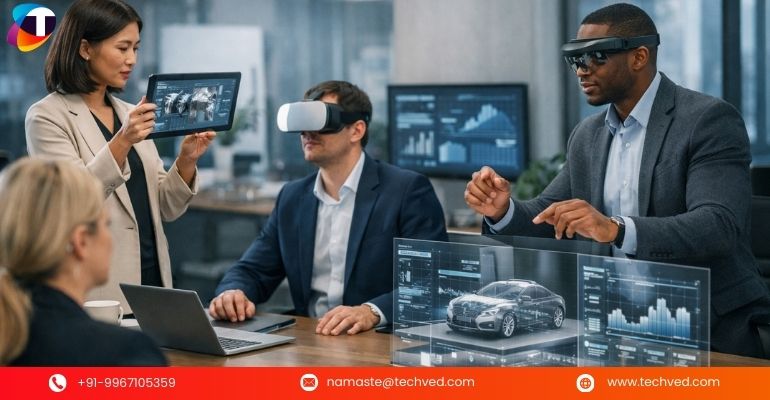
More than likely, you have heard leaders in meetings asking this question now:
"Should we invest in AR, VR and MR and how does AI fit into all of this?"
That is a fair question. Immersive augmented reality services and technologies are no longer just futuristic ideas. They're changing how customers explore products, how employees learn and how businesses go digital. With so many options, it's easy to feel confused about which path to choose.
Read on to understand how AR, VR and MR play out in an AI world and where each fit into the picture for what makes sense to your business. You’ll also gain practical clarity and real-world use cases as well as a strategic lens of understanding to invest wisely into immersive tech.
First, What Are AR, VR & MR All About?
Augmented Reality (AR) adds digital elements like text, pictures, or 3D objects on top of the real world, viewed through a smartphone camera or smart glasses. Think Pokémon GO showing creatures on your street or the IKEA app previewing furniture in your room. Virtual Reality (VR), by contrast, immerses you in a fully digital environment via headsets, letting you fight zombies in games, train for surgery on virtual patients, or take museum tours from your living room.
Mixed Reality (MR) blends both by enabling digital objects to interact with the physical world in real time, such as engineers collaborating on a virtual machine model during remote meetings or surgeons overlaying interactive patient scans on the operating table.
The AR VR MR spectrum combines their differences of integration into each other to serve diverse business needs.
How AI Changes the Game
Artificial Intelligence is the force multiplier accelerating this pace towards immersive adoption.
With the benefit of AI, immersive platforms now
- Understand user behavior and adapt experiences in real time
- Personalize content concerning context and intent
- Enable intelligent object recognition and spatial mapping
- Improve realism, performance and analytics
This merger of AI and immersive technology is why more organizations invest heavily in AR VR solutions that go beyond the novelty of content delivery for measurable impact.
Choosing the Right Immersive Technology: A Strategic View
Instead of asking, "Which technology is better?", the real question is "What problem are we solving?"
Simple way to guide decision making:
- Choose AR for large scale, ease of access and engaging customers
- Choose VR for immersion and depth of training and focus
- Choose MR for real-time digital-physical interaction
A sound augmented reality strategy or an immersive roadmap makes sure that technology will enable rather than constrain outcomes.
The Role of AR & VR Development Services
Off the shelf tools would never deliver value at enterprise level. That's why organisations go to specialists who provide such AR VR Development services.
The right partner ensures provision of:
- Experience design and AR content creation
- Platform selection and integration
- Implementation of AI model for personalization
- Performance, security, and scalability
End-to-end AR and VR services altogether ensure immersive solutions aligned with business goals, not merely technical possibilities.
What is the Future of Immersive Tech and AI?
Markets project immersive tech growth to $170 billion by 2033, transforming enterprise training, remote work and digital twins for predictive planning. For B2B pros, this means AI-backed AR/VR solutions for fintech events and lead gen will create real ROI.
What is coming next:
- AI-powered personalization at scale
- Voice and gesture-led navigation
- Context-aware immersive journeys
- Effortless connectivity across devices
Investing in those early in the augmented reality evolution will leave companies with a long-term competitive edge. Those that invest early and invest in the right strategy will gain competitive advantages for the long-term future.
Final Thoughts
AR, VR and MR are complementary tools in the modern digital toolbox, not competing technologies. Winning organizations adopt immersive tech based on real business needs, integrate AI for intelligence and scalability and collaborate with experts skilled in both technology and user experience. With the right AR/VR solution and AI-backed execution from partners like TECHVED, immersive technology delivers true enterprise value instead of just experiments.
Wish to read and know more about TECHVED and its offerings? Click here!
FAQs
Why is immersive technology important?
Immersive technology is important because it creates engaging, interactive experiences that improve learning, collaboration, and customer engagement. It helps businesses communicate complex ideas more effectively and drive stronger user adoption.
How can businesses create immersive experiences for their customers?
Businesses can create immersive experiences by using technologies like AR, VR, and interactive digital environments to engage customers in meaningful ways. Personalisation, intuitive design, and real-time interaction further enhance these experiences.
Which technology is commonly used in immersive learning?
Immersive learning commonly uses virtual reality (VR) and augmented reality (AR) to create interactive, experiential environments. These technologies simulate real-world scenarios for more effective learning and retention.
How can businesses benefit from immersive technology?
Businesses benefit from immersive technology by improving customer engagement, training effectiveness, and brand experiences. It also helps reduce costs, accelerate learning, and drive better decision-making
What are the benefits of immersive technology for hybrid work?
Immersive technology enhances hybrid work by enabling more engaging virtual collaboration, realistic training, and shared digital workspaces. It improves communication, reduces distance barriers, and boosts productivity across distributed teams.
Most Popular

Inclusive Mobile Design: Building Accessible Apps for Global Users

Anticipatory UX: Designing User Experiences That Predict Intent
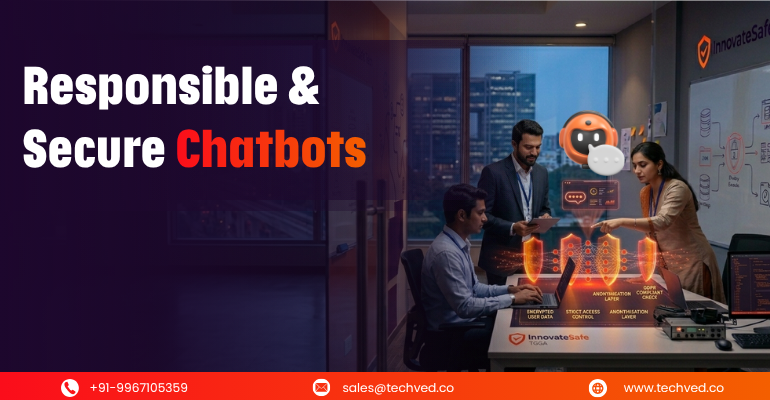
Safe Innovation: Implementing AI Chatbots with Strict Data Privacy Guardrails

DPDP 2025 Readiness: Building Credible Platforms for a Data-First World

The Trust Economy: Viewing Cybersecurity as a Growth Strategy
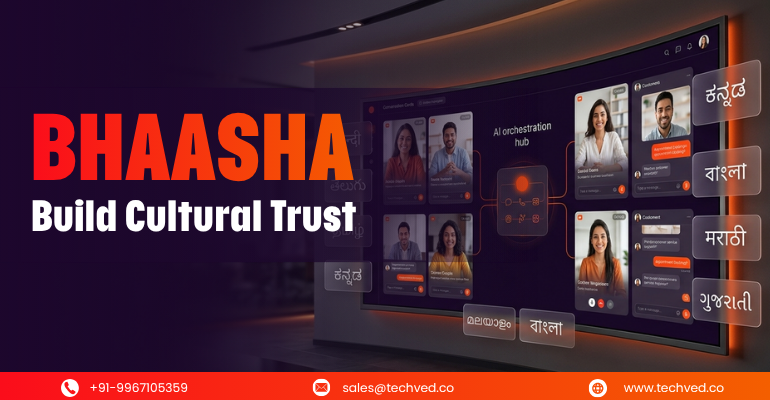
Beyond Translation: Using BHAASHA to Build Cultural Trust
Hyper-Localization: Speaking the Customer Language for Global Growth
Written By
Jay Anthony
Marketing Head
He led efforts to develop a fully integrated marketing communications plan and growing team. He is responsible for successful corporate re-brand and update of all branded assets.

Stay up-to-date with
all new market trends and
happenings
 #InclusiveMobileDesign #MobileAccessibility #DigitalAccessibility
Inclusive Mobile Design: Building Accessible Apps for Global Users
#AnticipatoryUX #PredictiveUX #AIinUXDesign
Anticipatory UX: Designing User Experiences That Predict Intent
#AIChatbotSecurity #PrivacyFirst #ResponsibleAI
Safe Innovation: Implementing AI Chatbots with Strict Data Privacy Guardrails
From Ideation To Digital Transformation
We take care of all your needs


