

- Home
- Services
- Automated Translation
- TECHVED AI
- Case studies
- CLIENTS
- More

Let's get started
We believe in advancing your business growth with innovative ideations and strategies
Get In Touch


 Back
BackWhy Your Marketing Tech Isn’t Working and How AI Can Fix It
#MarketingTechnology #MarTech #AIInMarketing

Jay Anthony
30 January 2026 | 8 min read

The clatter of tools, dashboards, data and channels surrounds marketing teams today. Yet, quite a few still have trouble turning this noise into something that matters. Campaigns appear disjointed, customer journeys are seen to be fragmented and the insights come rather late to do any good. Sound familiar?
This is exactly where AI starts disassembling the chessboard.
Continue reading to find out how artificial intelligence is reshaping marketing technology platforms, why this is important to the modern business landscape and how organisations will use AI-powered martech solutions for marketing that is smarter, faster and downright human. You'll gain a clear view of advanced use cases, real business value and what to look for in the next generation of marketing technology.
The Evolving Relationship Between Marketing and Technology
Marketing-technology interactions have never been denser. A long journey has proceeded from simple email tools and CRM systems to an extremely complex market technology ecosystem that includes data, automation, analytics, personalisation and customer experience.
Advanced use cases of martech platforms lie at the very heart of high-tech marketing, helping teams manage:
- Customer data across channels
- Campaign execution at scale
- Performance measurement in real time
However, marketing technology companies have grown incredibly complex. Today, a single B2B company might use dozens of tools, most of which don’t communicate with each other. Adding AI to the mix can feel like another complication, but it also has the power to connect everything seamlessly.
What Role Does AI Play In Modern Martech Platforms?
AI is about initiating the understanding, prediction and action capabilities of marketing platforms on three levels.
At its core, artificial intelligence analysis isn’t so focused on simple input-output ratios. Instead, it analyzes large volumes of data to identify patterns and predict unlikely outcomes. In martech services, this means AI pushes platforms to go beyond reactive reporting and make proactive decisions.
Key capabilities of an AI Marketing Technology Solution are:
- Data unification and enrichment
- Predictive analytics and forecasting
- Real-time personalisation
- Automated optimisation
These abilities are especially handy in the field of B2B tech marketing, where buying cycles seem very long and so very complex.
Mass Customisation From Message To Moment
Personalisation is no longer optional but expected. Yet delivery of relevant experiences manually to thousands of users is simply impossible.
This is where advanced use cases of martech truly shine. AI-powered martech services enable dynamic content recommendations, personalized email and website experiences and context-aware messaging that respond to user behavior and intent.
AI does not overlook the communication of the same message to everyone. Rather, AI allows martech companies to fine-tune their individualised communication. If executed right, the impact would be tremendous on the part of engagement, quality of leads and conversion rates.
Intelligent Marketing Automation
As part of martech over the past few years, AI makes automation all the more effective.
AI-driven martech solution capabilities go beyond even scheduling tasks; they learn and optimise workflow continuously with such innovations as:
- Lead scoring based on behaviours not assumptions
- Automated nurturing journeys adapts in real-time
- Campaign optimisation - no human intervention involved in process
- AI backed automation delivers scalability without irrelevance to business partnering.
4 Ways Businesses may Leverage AI-driven Martech for Effectiveness
Although the benefits of AI-powered martech are clear, achieving successful adoption isn’t automatic. Companies need a well-defined strategy that aligns technology with business goals, ensures proper training and addresses integration challenges, otherwise even the most powerful tools may fail to deliver meaningful results.
Here’s your cheat code:
- Start with clear business objectives, not tools
- Evaluate existing martech services and data quality
- Bring in seasoned martech partners
- Invest in change management and skills
A structured approach ensures that artificial intelligence delivers measurable value, not just technical sophistication.
Final Thoughts: AI is No Longer Optional in Martech
The intelligent, adaptive, customer-centric future of marketing technology does not eliminate marketers but makes them free to focus on strategy, creativity and impact. For B2B tech companies and modern enterprises alike, integrating AI is no longer a choice. It has become a necessity for modern enterprises and B2B tech companies to invest in AI-enabled Marketing Technology Solution platforms.
Check out some of our latest blogs for exclusive insights on martech and AI, and how as a high tech marketing & technology consulting firm, TECHVED drives digital transformation to help businesses be in sync with the latest updates.
FAQs
What is artificial intelligence in marketing?
Artificial intelligence in marketing uses data, algorithms and machine learning to understand customer behaviour and automate decision-making. It helps brands personalise experiences, optimise campaigns, and improve marketing performance at a scale.
How does AI improve advertising targeting on social media platforms?
AI analyses user behaviour, interests and engagement patterns to identify high-intent audiences with greater accuracy. It continuously optimises targeting and creatives in real time, improving relevance, reach and ad ROI.
What is an example of AI generated marketing?
An example of AI-generated marketing is personalised email campaigns where AI creates subject lines and content based on user behaviour. Another example is AI-driven ad creatives that automatically adapt visuals and messaging for different audience segments.
How AI benefits marketing?
AI helps marketing teams analyse data faster, personalise customer experiences and target the right audience more effectively. It also automates optimisation, improves ROI and enables smarter, data-driven decision-making.
Most Popular
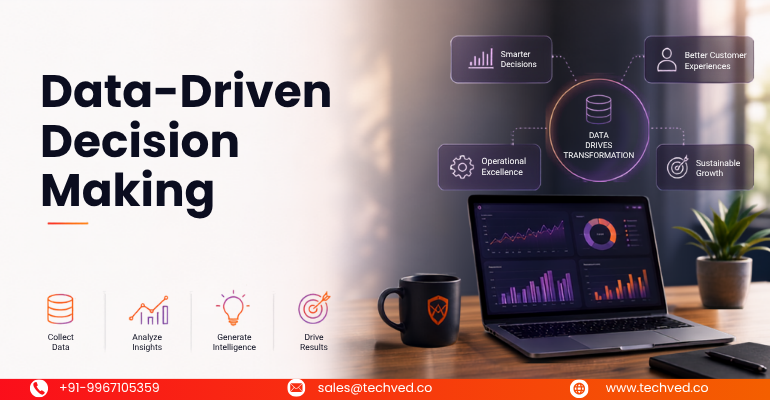
Data-Driven Decision-Making: The Overlooked Foundation of Digital Transformation
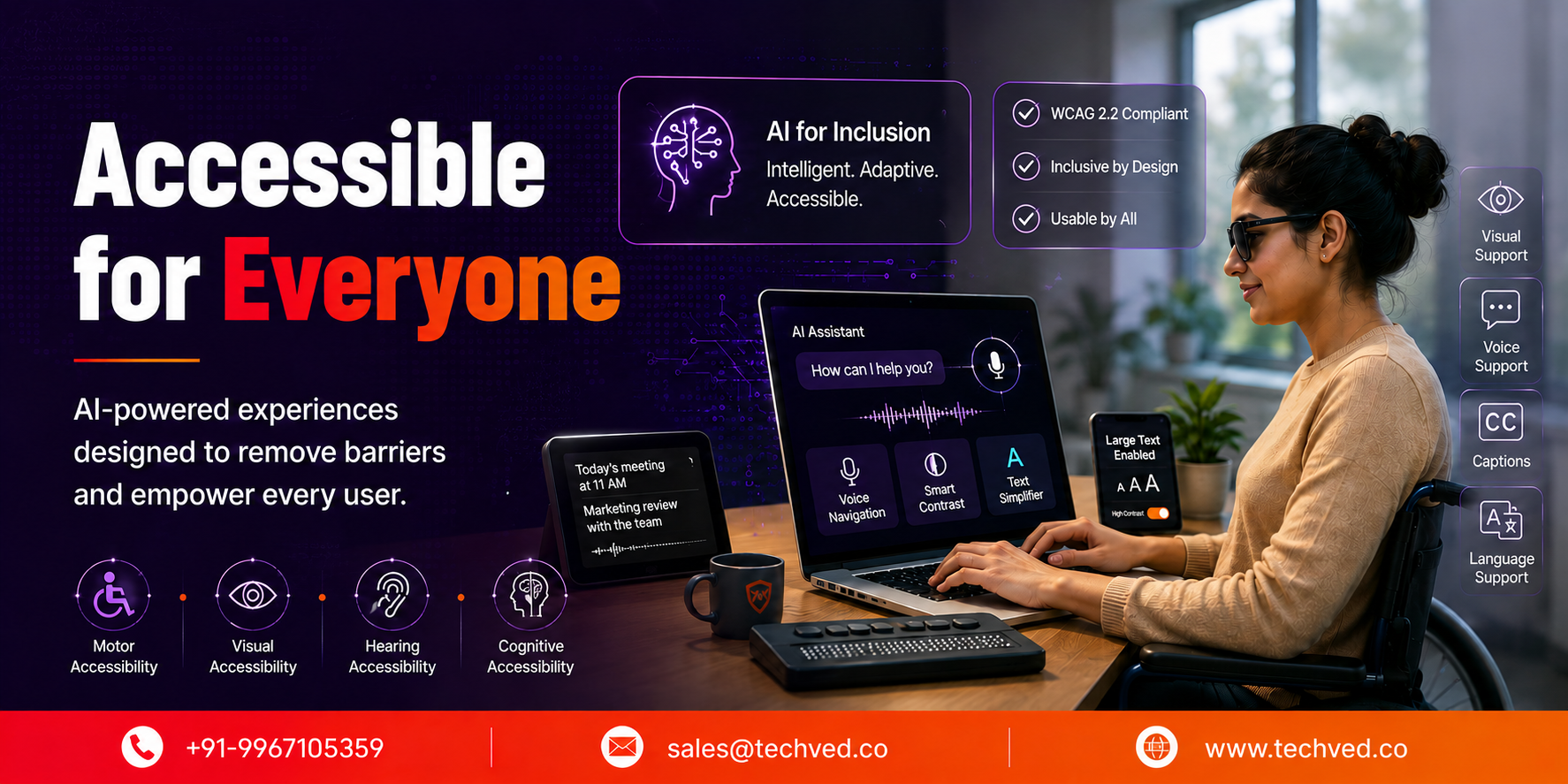
Accessibility in the Age of AI: Designing Inclusive Intelligent Experiences

Inclusive Mobile Design: Building Accessible Apps for Global Users
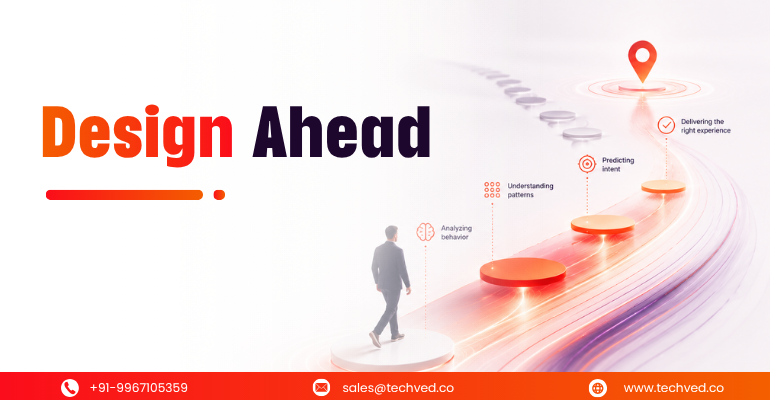
Anticipatory UX: Designing User Experiences That Predict Intent

Safe Innovation: Implementing AI Chatbots with Strict Data Privacy Guardrails

DPDP 2025 Readiness: Building Credible Platforms for a Data-First World

The Trust Economy: Viewing Cybersecurity as a Growth Strategy
Written By
Jay Anthony
Marketing Head
He led efforts to develop a fully integrated marketing communications plan and growing team. He is responsible for successful corporate re-brand and update of all branded assets.

Stay up-to-date with
all new market trends and
happenings
 #DataDrivenDecisionMaking #DigitalTransformation #EnterpriseAnalytics #BusinessIntelligence #TECHVED #TECHVEDConsulting
Data-Driven Decision-Making: The Overlooked Foundation of Digital Transformation
#Accessibility #DigitalAccessibility #InclusiveDesign #CustomerExperience #DigitalTransformation #EnterpriseAI #TECHVED #TECHVEDConsulting #ExperienceEngineering
Accessibility in the Age of AI: Designing Inclusive Intelligent Experiences
#InclusiveMobileDesign #MobileAccessibility #DigitalAccessibility
Inclusive Mobile Design: Building Accessible Apps for Global Users
From Ideation To Digital Transformation
We take care of all your needs


