

- Home
- Services
- Automated Translation
- TECHVED AI
- Case studies
- CLIENTS
- More

Let's get started
We believe in advancing your business growth with innovative ideations and strategies
Get In Touch


 Back
BackThe Importance of Usability Testing in Mobile App Success
#usabilitytesting

Jay Anthony
30 December 2025 | 8 min read

Have you ever downloaded an app, opened it once, and never used it again? You’re not alone. In today’s mobile-first world, users are quick to judge, and even quicker, to abandon apps that feel confusing, slow, or frustrating. A great idea or powerful functionality isn’t enough anymore. If users can’t easily navigate your app, understand what to do next, or achieve their goal smoothly, they’ll move on.
This is where usability testing becomes critical. Read on to know why usability testing is essential to mobile app success, how it impacts user experience, and how businesses can leverage usability audit services, UX and UI testing, and AI-backed solutions to build apps users actually love. You’ll also gain insights on how the right testing approach can reduce risk, improve engagement, and drive measurable business outcomes.
What Is Usability Testing and Why Does It Matter?
Usability testing is the process of evaluating how real users interact with your mobile app. It focuses on answering simple but crucial questions:
- Is the app easy to use?
- Can users complete tasks without confusion?
- Does the interface feel intuitive and efficient?
Unlike assumptions or internal opinions, usability testing relies on real behavior. It reveals where users struggle, where they drop off, and what slows them down. These insights form the foundation of a usability audit, helping teams identify issues early on before they impact retention, ratings, or revenue.
In short, usability testing ensures your app works for users, not just as designed.
The Link Between Usability and Mobile App Success
Mobile apps live in an unforgiving environment. Users expect speed, clarity, and consistency across devices. Poor usability can directly lead to:
- High uninstall rates
- Low app store ratings
- Reduced conversions
- Increased support costs
On the other hand, apps that invest in user experience testing and UX and UI testing see:
- Higher engagement and session duration
- Better conversion rates
- Stronger brand trust
- Improved customer loyalty
By deploying UX audit services, businesses can bridge the gap between design intent and real-world use, making it a core pillar of mobile app success.
Key Areas Usability Testing Covers in Mobile Apps
1. Navigation and Flow
Can users move through the app logically? Usability testing highlights confusing menus, broken flows, or unnecessary steps that frustrate users.
2. Interface Clarity
Through UX and UI testing, teams assess button placement, text readability, touch targets, and visual hierarchy to ensure the interface feels natural on small screens.
3. Task Completion
Usability testing services evaluate how easily users can complete key actions, such as signing up, making a purchase, or booking an appointment.
4. Performance Perception
Even minor delays feel bigger on mobile. Testing reveals where performance impacts usability and perceived quality.
Usability Testing vs. UX Audit: What’s the Difference?
While usability testing focuses on observing user interactions, a UX audit takes a broader, strategic view.
A website user experience audit or mobile UX audit examines:
- Overall user journey
- Design consistency
- Accessibility and inclusivity
- Alignment with business goals
Businesses often combine UX audit services, UI UX audit services, and usability testing for a complete picture. This approach not only fixes surface-level issues but also strengthens the entire experience.
For organizations looking for a website UX audit company or UX audit services and solutions, this combined method delivers faster and more impactful results.
The Role of AI in Modern Usability Testing
Usability testing has evolved beyond manual observation alone. AI is now transforming how insights are captured and analyzed.
AI-backed usability testing services can:
- Analyze user behavior patterns at scale
- Identify friction points automatically
- Predict drop-offs and usability risks
- Speed up testing cycles
TECHVED, a leading digital transformation and tech innovation company, empowers businesses by combining traditional usability testing with AI-backed solutions. This hybrid approach delivers deeper insights, faster optimization, and smarter decision-making, which is especially critical for fast-moving mobile products.
Why Businesses Can’t Ignore Usability Audits
A usability audit is not a one-time activity, but an ongoing investment in product success. Regular audits help businesses:
- Catch issues before major releases
- Adapt to evolving user expectations
- Improve ROI on development efforts
- Reduce redesign and rework costs
Companies offering usability audit services and UX audit in Mumbai are increasingly helping enterprises stay competitive in crowded app marketplaces by turning user feedback into actionable improvements.
Usability Testing Across the App Lifecycle
Usability testing isn’t limited to launch phases. It plays a role at every stage:
- Early-stage apps: Validate ideas and flows before development
- Mid-development: Identify friction during feature build-out
- Post-launch: Improve retention and engagement
- Mature products: Optimize for scale and new user segments
By integrating user experience testing throughout the lifecycle, businesses ensure continuous improvement instead of reactive fixes.
How TECHVED Supports Mobile App Usability Excellence
TECHVED helps businesses build successful mobile apps through a combination of:
- Usability testing services backed by real user insights
- UX and UI testing for clarity, consistency, and accessibility
- Strategic UX audit services and solutions
- AI-powered analysis for faster, smarter optimization
As a trusted website UX audit company and digital transformation partner, TECHVED enables organizations to move beyond assumptions and design apps grounded in real user behavior, thereby driving better engagement, retention, and business growth.
Final Thoughts: Usability Is Not Optional
In today’s competitive mobile landscape, usability isn’t a “nice-to-have” but a business necessity. Apps that ignore usability testing risk losing users before they even understand the value. Those that invest in usability testing services, usability audits, and UX and UI testing gain a clear advantage.
The most successful mobile apps are not just feature-rich, but they’re also simple, intuitive, and user-focused. With the right testing approach and AI-backed support from partners like TECHVED, businesses can turn usability into a powerful driver of mobile app success
FAQs
What are the 5 components included in usability testing?
The five key components of usability testing include learnability, efficiency, memorability, error handling, and user satisfaction. Together, they evaluate how easily users can use and enjoy a product.
Which tool is used for usability testing?
Usability testing can be conducted using tools like UserTesting, Lookback, Hotjar, and Optimal Workshop. At TECHVED, we leverage AI-backed insights and user experience testing to ensure apps deliver seamless user experiences.
What are the 5 elements of UX?
The five key elements of UX are strategy, scope, structure, skeleton, and surface. Together, they guide the creation of user-centered, intuitive, and engaging digital experiences.
What are the 4 C's of UX design?
The 4 C’s of UX design are Clarity, Consistency, Confidence, and Context. They ensure interfaces are intuitive, trustworthy, and aligned with user needs.
What is an example of usability testing?
An example of usability testing is observing users as they navigate a mobile app to complete tasks like signing up or making a purchase. This helps identify pain points and improve the overall user experience.
Most Popular

Data-Driven Decision-Making: The Overlooked Foundation of Digital Transformation
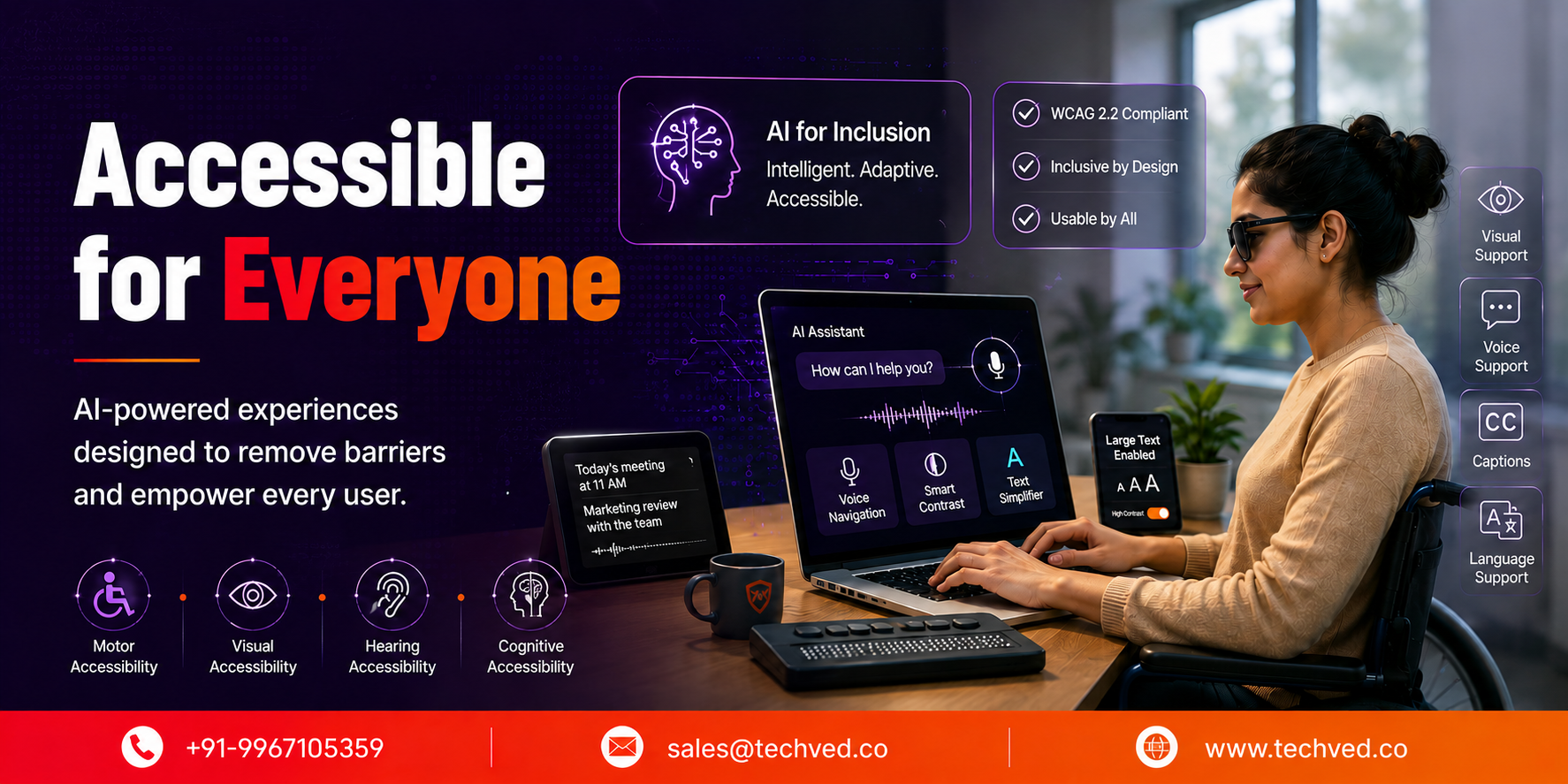
Accessibility in the Age of AI: Designing Inclusive Intelligent Experiences

Inclusive Mobile Design: Building Accessible Apps for Global Users

Anticipatory UX: Designing User Experiences That Predict Intent

Safe Innovation: Implementing AI Chatbots with Strict Data Privacy Guardrails

DPDP 2025 Readiness: Building Credible Platforms for a Data-First World

The Trust Economy: Viewing Cybersecurity as a Growth Strategy
Written By
Jay Anthony
Marketing Head
He led efforts to develop a fully integrated marketing communications plan and growing team. He is responsible for successful corporate re-brand and update of all branded assets.

Stay up-to-date with
all new market trends and
happenings
 #DataDrivenDecisionMaking #DigitalTransformation #EnterpriseAnalytics #BusinessIntelligence #TECHVED #TECHVEDConsulting
Data-Driven Decision-Making: The Overlooked Foundation of Digital Transformation
#Accessibility #DigitalAccessibility #InclusiveDesign #CustomerExperience #DigitalTransformation #EnterpriseAI #TECHVED #TECHVEDConsulting #ExperienceEngineering
Accessibility in the Age of AI: Designing Inclusive Intelligent Experiences
#InclusiveMobileDesign #MobileAccessibility #DigitalAccessibility
Inclusive Mobile Design: Building Accessible Apps for Global Users
From Ideation To Digital Transformation
We take care of all your needs


