

- Home
- Services
- Automated Translation
- TECHVED AI
- Case studies
- CLIENTS
- More

Let's get started
We believe in advancing your business growth with innovative ideations and strategies
Get In Touch


 Back
BackCross-Platform Game Development: Challenges & Best Practices
#CrossPlatformGameDevelopment #GameDevelopment

Jay Anthony
23 December 2025 | 8 min read
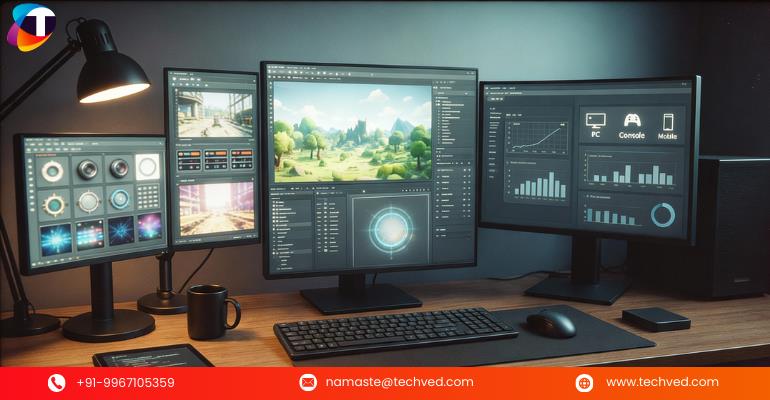
If you have ever tried launching a game across multiple devices, you already know the frustration: it works perfectly on one platform, then behaves unpredictably on another. The idea of “build once, deploy everywhere” sounds simple, but anyone in the gaming or product ecosystem knows that cross-platform game development is far from easy. Whether you are building a mobile game, an enterprise training module, or experimenting with gamification technology, the challenge is the same: creating a consistent and high-quality player experience.
Read on to know why cross-platform game development matters, the biggest challenges developers face, and the best practices game devs and businesses can adopt to build scalable, user-friendly gaming experiences. You will also gain insights into how modern tools, gamification strategies, and AI-backed technologies, including those offered by TECHVED, are making this process smoother than ever.
Why Cross-Platform Game Development Matters Today
The way users engage with gaming and interactive content has changed dramatically. People switch between smartphones, tablets, consoles, desktops, and even smart TVs within a single day. For companies investing in gaming or gamification, whether for entertainment, brand engagement, employee training, or learning, being present on multiple platforms is no longer optional.
Cross-platform development unlocks several advantages:
- Access to wider audiences across devices
- Reduced development and maintenance costs
- Faster go-to-market
- Unified user experience
- Ability to deploy gamification and learning modules easily
From video games to enterprise-grade gamification solutions, cross-platform adaptability ensures that your idea reaches users wherever they are.
The Core Challenges in Cross-Platform Game Development
Despite its advantages, creating truly cross-platform games or gamified applications is complex. Here are the biggest hurdles:
1. Different Hardware and OS Requirements
Every platform; namely iOS, Android, Windows, macOS, and gaming consoles, behaves differently. Different screen sizes, memory limits, and processing capacities mean that a feature that runs smoothly on one device might lag on another.
2. Maintaining Consistent Game Design
Game design relies on visual accuracy, solid mechanics, fluid interactions, and consistent animations. Translating these elements into different environments often requires rethinking layouts, user flows, and responsiveness to ensure the experience feels natural everywhere.
3. Performance Optimization
Mobile game development demands optimized asset sizes, battery efficiency, GPU-friendly animations, and low-latency interactions. A video game built for PC can easily struggle on mobile if not optimized correctly.
4. Limitations of Game Development Software
Many game development software tools promise multi-platform support, but performance and capabilities can vary. Developers must choose tools that balance features, flexibility, and scalability; especially when gamification technology or enterprise-grade requirements are involved.
5. Platform-Specific Testing
Testing multiplies with every new platform added. Each device has its own bugs, performance constraints, and UI expectations, making Quality Assurance (QA) more intensive.
6. Complex Version Control
Cross-platform projects often require multiple codebases, patches, or updates. Keeping versions in sync becomes challenging and can slow down releases.
Best Practices for Successful Cross-Platform Game Development
While the challenges are real, they can be managed with the right approach. Here are proven best practices that game devs, game development companies, and enterprises can use to create seamless experiences across devices.
1. Choose the Right Game Development Framework
Unity, Unreal Engine, Godot, and other tools offer strong cross-platform capabilities. Choose one based on:
- Desired level of visual realism
- Performance needs
- Target audience
- Budget and team expertise
- Integration with gamification technology
A solid framework reduces friction and keeps development aligned across platforms.
2. Plan Game Design for Multi-Platform Use from Day One
Cross-platform success is 80% planning and 20% execution. Define your game design, mechanics, UI layouts, and animations with multiple devices in mind.
Consider:
- Progressive difficulty for different screen sizes
- Flexible UI grids
- Inputs that work on touch, controllers, and keyboards
- Adaptive visual systems
This ensures you don’t redesign the entire experience later.
3. Use Modular Architecture
Modular code allows developers to reuse components across platforms. It also simplifies debugging, updating, and adding new features of gamification.
This approach is especially important for enterprise gamification and learning apps where scalability matters.
4. Optimize Assets Early
Never leave optimization for the end. Minimize asset sizes, compress media, and ensure lightweight scripts. Optimizing early ensures smoother mobile game development and reduces performance issues across devices.
5. Implement Rigorous Testing Across All Devices
Create a detailed QA plan that covers:
- Device-specific functionality
- Performance benchmarking
- Network environments
- UI responsiveness
- Compatibility across OS versions
Testing ensures users enjoy a smooth, bug-free video game or gamified learning experience wherever they play.
6. Use Cloud-Based Syncing for User Data
A unified experience across devices requires synchronized progress. Cloud saves, leaderboards, and gamify rewards enhance user engagement and support the gamification and learning journey.
7. Focus on Consistent but Flexible UI/UX
The goal is to maintain consistency in style while adapting layouts to each platform’s strengths. Prioritize:
- Intuitive navigation
- Clear feedback
- Easy onboarding
- Device-appropriate interactions
This strengthens user trust and improves the overall gameplay experience.
8. Leverage AI for Intelligent Optimization
AI-backed tools can assist with:
- Auto-optimizing assets
- Predicting performance issues
- Generating adaptive gameplay
- Personalizing the learning experience in gamification of learning
- Speeding up testing cycles
AI can also support predictive analytics for player behavior, making games smarter and more engaging.
How Cross-Platform Development Enhances Gamification for Businesses
Today, gamification is more than a buzzword. Businesses use it to improve learning outcomes, increase employee motivation, simplify onboarding, and enhance customer engagement.
Cross-platform compatibility ensures that:
- Gamification of learning works seamlessly on both mobile and desktop
- Employees can access training materials anywhere
- Customers enjoy consistent experiences across apps and web platforms
- Enterprise-grade game development becomes more scalable
This alignment is crucial for modern enterprises adopting game-driven engagement strategies.
How TECHVED Empowers Businesses in Cross-Platform Game Development
TECHVED, a leading digital transformation and tech innovation company, supports enterprises and brands in building future-ready gaming and gamification solutions. With strong capabilities in AI-backed technologies, game design, UX, mobile game development, and enterprise-scale digital solutions, TECHVED enables businesses to:
- Build cross-platform game development strategies
- Optimize performance across devices
- Design engaging gamification and learning experiences
- Integrate advanced AI for personalization and analytics
- Deploy robust, scalable game development solutions
TECHVED’s expertise ensures that organizations can gamify processes, enhance engagement, and elevate user experiences with unmatched speed and quality.
Final Thoughts
Cross-platform game development is no longer a niche requirement but a strategic advantage. With users accessing content across multiple devices, businesses and game development companies must adopt the right tools, workflows, and strategies to deliver unified, engaging experiences. When supported by AI, intelligent frameworks, and experienced partners like TECHVED, cross-platform development becomes not only achievable but transformative.
Whether you are building a video game, developing a game design studio workflow, or implementing gamification for enterprise training, mastering cross-platform development will help you reach more users, maximize performance, and stay competitive in a rapidly evolving digital world.
FAQs
What are some challenges in the gaming industry? The gaming industry faces challenges like rising development costs, platform fragmentation, and high user expectations for performance and content quality. It also struggles with security threats, talent shortages, and the pressure to continuously innovate in an intensely competitive market.
Which language is best for game development?
C++ is widely considered the best language for game development due to its high performance and control over system resources. C# is also popular, especially for Unity-based games, offering faster development and strong cross-platform support.
What are the 3 C's of game design?
The 3 C's of game design are Character, Camera, and Controls, which define how players experience and interact with the game world. Together, they ensure smooth movement, clear visibility, and intuitive gameplay for an engaging user experience.
How can gamification be used in business?
Gamification can help businesses boost engagement by adding game-like elements such as rewards, challenges, and leaderboards to customer or employee experiences. It also improves learning, productivity, and motivation by making everyday tasks more interactive and goal-driven.
What are examples of gamification?
Examples of gamification include reward points in shopping apps, fitness streaks, badges, leaderboards, and progress trackers. Learning platforms, employee training systems, and customer loyalty programs also use game-like challenges to drive engagement.
Most Popular

Data-Driven Decision-Making: The Overlooked Foundation of Digital Transformation
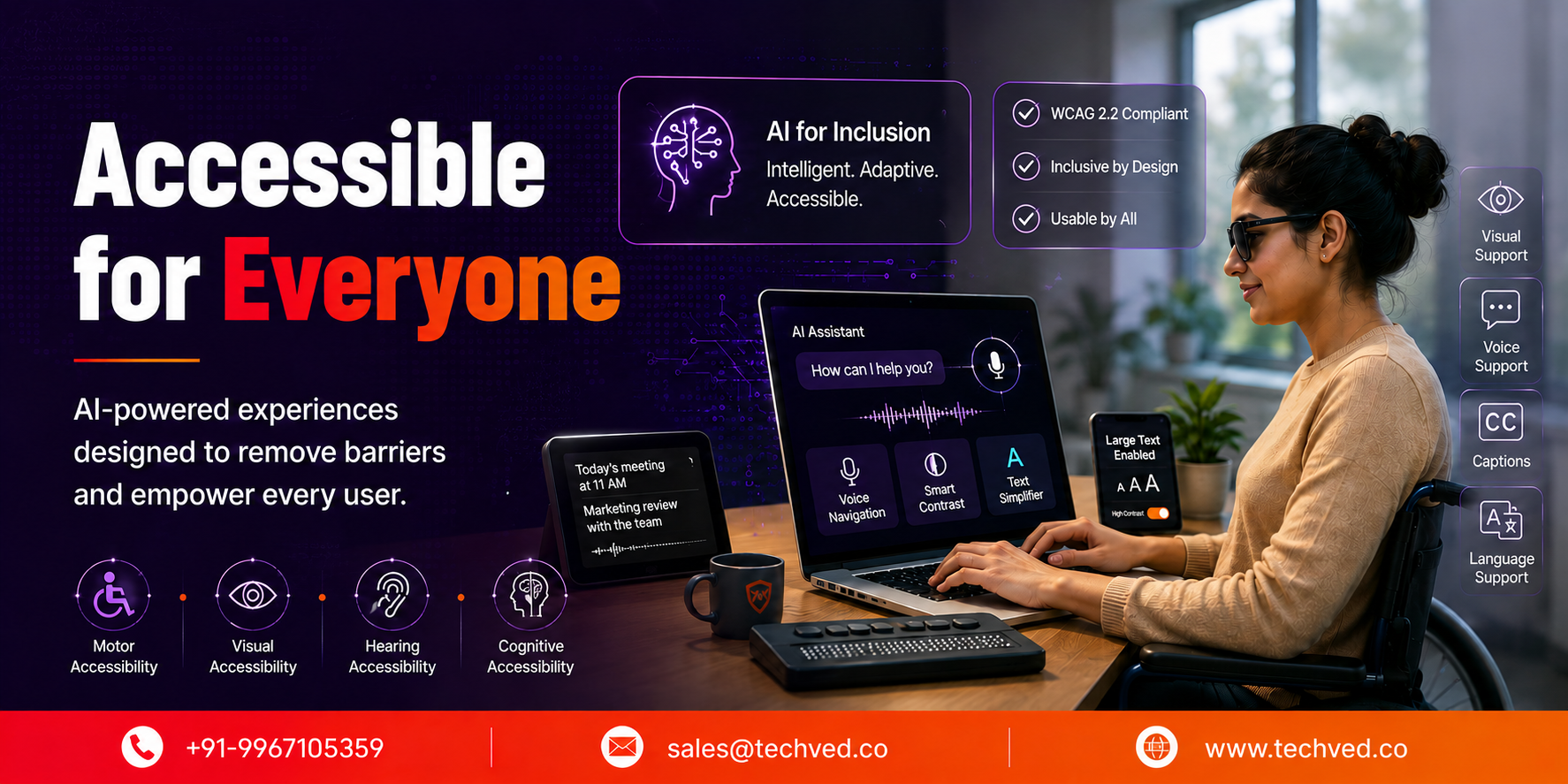
Accessibility in the Age of AI: Designing Inclusive Intelligent Experiences

Inclusive Mobile Design: Building Accessible Apps for Global Users

Anticipatory UX: Designing User Experiences That Predict Intent

Safe Innovation: Implementing AI Chatbots with Strict Data Privacy Guardrails

DPDP 2025 Readiness: Building Credible Platforms for a Data-First World

The Trust Economy: Viewing Cybersecurity as a Growth Strategy
Written By
Jay Anthony
Marketing Head
He led efforts to develop a fully integrated marketing communications plan and growing team. He is responsible for successful corporate re-brand and update of all branded assets.

Stay up-to-date with
all new market trends and
happenings
 #DataDrivenDecisionMaking #DigitalTransformation #EnterpriseAnalytics #BusinessIntelligence #TECHVED #TECHVEDConsulting
Data-Driven Decision-Making: The Overlooked Foundation of Digital Transformation
#Accessibility #DigitalAccessibility #InclusiveDesign #CustomerExperience #DigitalTransformation #EnterpriseAI #TECHVED #TECHVEDConsulting #ExperienceEngineering
Accessibility in the Age of AI: Designing Inclusive Intelligent Experiences
#InclusiveMobileDesign #MobileAccessibility #DigitalAccessibility
Inclusive Mobile Design: Building Accessible Apps for Global Users
From Ideation To Digital Transformation
We take care of all your needs


