

- Home
- Services
- Automated Translation
- TECHVED AI
- Case studies
- CLIENTS
- More

Let's get started
We believe in advancing your business growth with innovative ideations and strategies
Get In Touch


 Back
BackRevolutionize Customer Engagement with AR in UX
AR #AugmentedReality #ARVR #UX # ARVRDevelopment

Jay Anthony
15 April 2024 | 8 min read
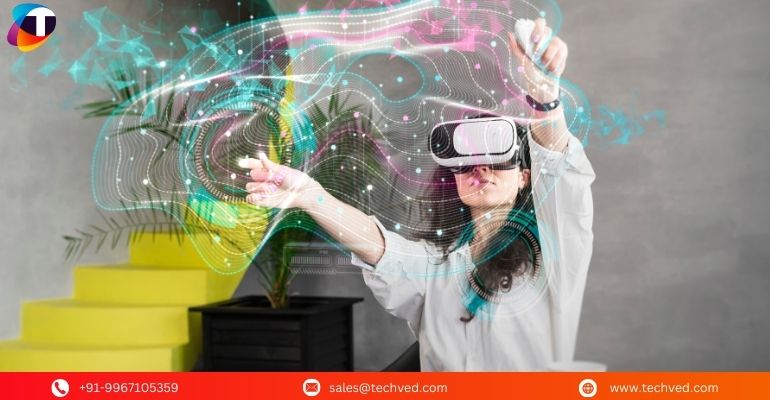
Augmented Reality (AR) is revolutionizing industries around the globe, and its impact on user experience (UX) is undeniable. Businesses across various sectors are not just adopting AR; they're leveraging it to transform their operations and boost customer engagement. This innovative technology doesn't just give businesses a technological edge – it also significantly enhances customer satisfaction and loyalty.
AR is proving to be a game-changer in the way companies captivate their increasingly tech-savvy customers. By enabling more immersive experiences, AR helps businesses not just catch the eye but also hold the attention and loyalty of their customers. Let's explore how AR is reshaping user experiences and revolutionizing customer interactions.
Unpacking the Power of AR for Business
AR overlays digital information on the real world, enhancing the way users interact with both physical and digital environments. This technology is not just an extension of the existing interfaces but a complete overhaul that redefines interaction paradigms.
According to a report, by 2024 there will be an estimated 1.7 billion mobile augmented reality (AR) users worldwide, a rise of 1.5 billion from the 200 million seen in 2015. This also indicates an increasing adoption and investment in AR technologies across various sectors.
Enhancing User Interfaces with AR for Increased ROI
The integration of AR in user interface design has led to the creation of more intuitive and engaging systems. Traditional 2D interfaces are giving way to 360-degree experiences that allow for interactions that are more fluid and natural. Take, for example, a leading furniture and interior decor company.
They allow users to visualize furniture in their own space before making a purchase. This application of AR has not only improved customer satisfaction but also reduced return rates significantly, leading to a higher return on investment (ROI).
AR VR Development: Pushing the Boundaries of Innovation
The development of AR and VR (Virtual Reality) technologies involves complex layers of software engineering, user interface design, and user experience considerations. Businesses investing in AR VR development benefit from a competitive edge that comes from offering cutting-edge technological solutions. Reportedly, AR technology in retail has revolutionized the try-before-you-buy concept, leading to an estimated 40% decrease in product returns.
Real-World Applications Demonstrating AR's Versatility
Here are some examples showcasing AR's diverse applications across industries:
[if !supportLists]l Retail: Beyond virtual try-ons, AR guides in large stores can help customers navigate complex layouts, enhancing the shopping experience and increasing time spent in-store, ultimately leading to more sales.
[if !supportLists]l Real Estate: AR applications enable potential buyers to visualize properties in various configurations, dramatically altering the decision-making process, shortening sales cycles, and increasing customer satisfaction.
[if !supportLists]l Education and Training: AR provides simulated environments that are ideal for training in contexts that are either too dangerous or expensive to replicate in real life. For example, AR in medical training has been shown to improve retention rates by up to 90% compared to traditional methods.
The Future of AR in Business
The evolving narrative of AR in business points toward a future where digital and physical realities blend seamlessly. The next step for businesses is not just adopting AR but strategically integrating it into their core operations to solve specific challenges, enhance customer engagement, and increase ROI.
Consumers believe AR is the most disruptive emerging technology, overtaking AI. The trend indicates that the early adoption of AR technologies can significantly contribute to gaining market leadership and setting industry standards.
Conclusion: AR - An Imperative for Business Success
The integration of AR into UX and customer engagement strategies represents a significant leap toward future-ready business practices. With its ability to enrich user interaction, operational efficiency, and customer satisfaction, AR is not merely a technological upgrade but a comprehensive strategy for growth and a competitive advantage.
Businesses that recognize and leverage the power of AR today are setting themselves up for leadership in the digital economy of tomorrow. The evidence is clear: AR is not just an option; it's an imperative for future success.
FAQs
Explain what is Augmented Reality (AR), and the different elements it employed in the UX Design?
AR, besides digital enhancements over real-world environments, comes to the rescue of the UX design, and the gaming part of it gets more engaging. Through the way of AR technology, users get a perfect mixture of the real space with the online one, how to talk and how to display information becomes a quite natural thing.
Is AR the best thing that could ever happen to generate a customer engagement for my business?
Absolutely! AR facilitates interactions with the customers by bringing them in places where they can see, experience and feel the products. Besides experiencing AR through glasses while shopping in a virtual environment or using interactive AR in the interfaces, the technology delivers unforgettable moments that can be a key to increased customer satisfaction and raising number of converted customers.
What are the foremost benefits of implementing digital AR & VR technologies in business enterprises?
AR & VR can greatly increase the interaction level of users, improve customer retention, and increase the conversion ratio by adapting to the modern business environment. As for technology, it creates advanced methods of product representation enabling the transmission of complex informational material in an attractive and informative way through so called digital interaction.
One question that comes to mind is whether there are any specific industries in which AR VR services tend to see the most benefits
Industries such as retail, real estate, education, healthcare, and tourism can highly benefit in AR VR development technology for their own niche. Virtual reality systems can be employed within the retail industry to allow customers test outways products through virtual try-on or made to measure solutions. Also, in education sector, AR and VR can be applied to customize the learning environment to cater for the peculiar needs of both teachers and students.
What considerations are crucial for effective AR VR Development in UX Design?
While giving consideration to the ease of use, comfort, and intuitive user experience to avoid overloading users while using AR and VR, make user oriented design your priority. It is equally important to assure that you can growing in the field of AR VR services and make them scalable and adaptive to future new technologies in AR and VR technologies, so your solutions will be on the level of innovation.
Most Popular
Multilingual UX for Indic Scripts: Where Regional Language Products Quietly Break

Data-Driven Decision-Making: The Overlooked Foundation of Digital Transformation
Accessibility in the Age of AI: Designing Inclusive Intelligent Experiences
Inclusive Mobile Design: Building Accessible Apps for Global Users
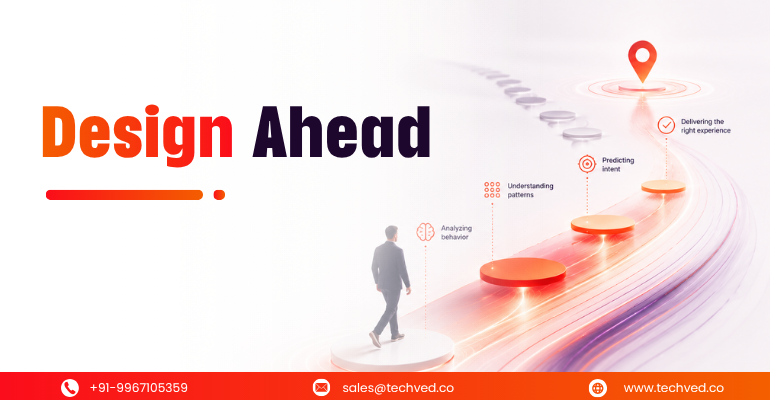
Anticipatory UX: Designing User Experiences That Predict Intent
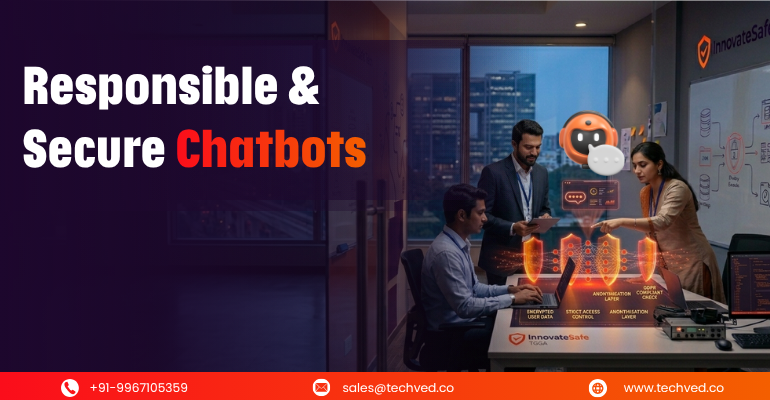
Safe Innovation: Implementing AI Chatbots with Strict Data Privacy Guardrails

DPDP 2025 Readiness: Building Credible Platforms for a Data-First World
Written By
Jay Anthony
Marketing Head
He led efforts to develop a fully integrated marketing communications plan and growing team. He is responsible for successful corporate re-brand and update of all branded assets.

Stay up-to-date with
all new market trends and
happenings
 #MultilingualUX #IndicScripts #RegionalLanguage #DesignSystems #DigitalAccessibility #TECHVED #TECHVEDConsulting
Multilingual UX for Indic Scripts: Where Regional Language Products Quietly Break
#DataDrivenDecisionMaking #DigitalTransformation #EnterpriseAnalytics #BusinessIntelligence #TECHVED #TECHVEDConsulting
Data-Driven Decision-Making: The Overlooked Foundation of Digital Transformation
#Accessibility #DigitalAccessibility #InclusiveDesign #CustomerExperience #DigitalTransformation #EnterpriseAI #TECHVED #TECHVEDConsulting #ExperienceEngineering
Accessibility in the Age of AI: Designing Inclusive Intelligent Experiences
From Ideation To Digital Transformation
We take care of all your needs


