

- Home
- Services
- Automated Translation
- TECHVED AI
- Case studies
- CLIENTS
- More

Let's get started
We believe in advancing your business growth with innovative ideations and strategies
Get In Touch


 Back
BackThe Role of AI in Next Generation Mobile App Development
#MobileAppDevelopment #AI #ArtificialIntelligence

Jay Anthony
26 September 2025 | 8 min read
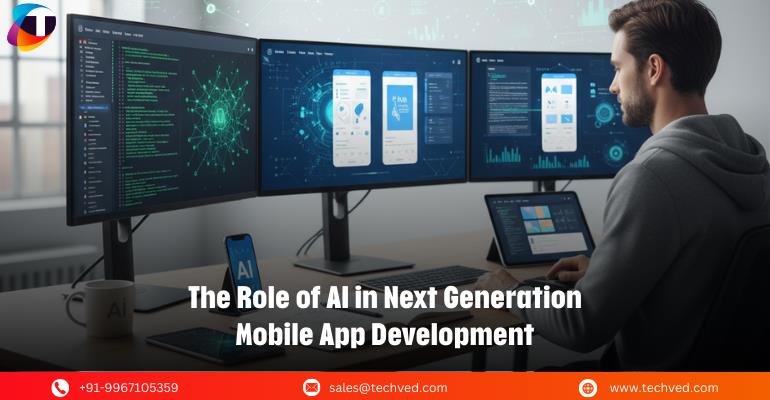
Artificial Intelligence (AI) is no longer just a buzzword—it is the backbone of next-generation digital innovation. In the rapidly evolving world of mobile technology, AI is shaping how businesses build, scale, and personalise their applications. From predictive analytics to natural language processing and mobile AR development, AI-driven innovation is unlocking endless possibilities for both businesses and end-users.
For companies investing inmobile development services, the integration of AI is no longer optional—it’s a necessity for building future-ready, intelligent mobile solutions that stand out in a crowded marketplace.
Read on to explore the role of AI in next-generation mobile app development, highlight emerging mobile application trends, and discuss how businesses can implement AI through a strategic mobile app implementation plan.
Why AI is a Game-Changer in Mobile App Development
The digital-first economy demands applications that are fast, personalised, and context-aware. AI enhances mobile applications by bringing in intelligence, automation, and predictive capabilities. A mobile app development company that leverages AI can offer more than just an app—they deliver an evolving ecosystem of mobile solutions and technology that adapt to users’ needs.
Key benefits AI delivers include:
- Personalisation:Tailored recommendations, curated feeds, and user-specific interactions.
- Automation: Chatbots, voice assistants, and AI-driven workflows that reduce manual effort.
- Predictive Analytics:Data-driven forecasts that optimise user experiences and operational efficiency.
- Enhanced Security:AI algorithms that detect anomalies and strengthen mobile security protocols.
AI-Driven Mobile Application Trends
The mobile industry is experiencing a seismic shift fueled by AI. Below are some of the most transformative mobile application trends businesses should watch out for:
1. Intelligent Personalisation
Users now expect their apps to “know” them. AI enables apps to learn user behavior patterns and offer hyper-personalised experiences, from shopping suggestions to content recommendations. This trend is particularly vital for e-commerce and entertainment apps.
2. Conversational Interfaces
Voice assistants, chatbots, and conversational AI are redefining customer engagement. Amobile app design companycan integrate these features to provide 24/7 customer support, interactive shopping, or in-app guidance.
3. Mobile AR Development
Augmented Reality (AR) powered by AI is revolutionizing industries such as gaming, education, and retail. Mobile apps for game tech use AR to create immersive experiences, while retailers employ AR to enable virtual product trials.
4. AI-Enhanced Security
With growing concerns around data privacy, AI-based mobile solutions now play a crucial role in fraud detection, authentication, and compliance. For industries requiring a compliant mobile-first strategy, AI ensures secure and scalable application deployment.
5. Predictive and Proactive Apps
From health monitoring to financial planning, predictive AI empowers apps to proactively offer solutions before users even realise their needs.
The AI-Powered Mobile App Implementation Plan
Developing next-generation AI-driven apps requires a structured mobile app implementation plan that combines innovation with scalability. A typical roadmap includes:
Step 1: Define Goals and Use Cases
Businesses must start by identifying where AI can add the most value. For example, an e-commerce platform might prioritise recommendation engines, while a fintech app might focus on fraud detection.
Step 2: Choose the Right AI Frameworks
Popular AI frameworks like TensorFlow, PyTorch, and Core ML help developers build intelligent features into mobile applications.
Step 3: Design with AI at the Core
A mobile app design company needs to rethink UX/UI, ensuring seamless integration of AI-driven elements like chatbots, predictive search, and voice recognition.
Step 4: Integration and Testing
AI models must be integrated with back-end systems while ensuring they don’t compromise speed or scalability. Rigorous mobile usability testing helps validate performance across devices and user scenarios.
Step 5: Deployment and Continuous Learning
AI-powered apps are never static. They require continuous updates, retraining of models, and performance optimisation to remain relevant.
The Role of AI in Mobile Solutions and Technology
AI is not just about smarter apps—it’s about delivering holistic mobile solutions and technology that empower businesses across sectors. Let’s look at how AI transforms specific industries:
- Healthcare: AI-driven apps assist in remote diagnostics, patient monitoring, and drug discovery.
- Finance: Fraud detection,AI chatbots for banking, and predictive investment insights.
- Retail: Personalised shopping journeys, virtual try-ons via mobile AR development, and AI-driven inventory optimisation.
- Gaming: Mobile apps for game tech integrate real-time AR/VR and adaptive gameplay.
- Enterprise: Productivity apps with AI assistants that automate workflows and boost collaboration.
By combining AI with mobile solutions services, companies can bridge gaps between user expectations and digital delivery.
Why Partner with the Right Mobile App Development Company?
Not every app development partner is equipped to build AI-powered experiences. Businesses must look for a mobile app development company that offers:
- Expertise in AI Integration: Knowledge of AI frameworks, algorithms, and model training.
- Comprehensive Mobile Application Services: From ideation and design to deployment and support.
- Compliance and Security: A compliant mobile-first strategy with data privacy and industry-specific regulations in mind.
- Scalable Mobile Solutions Services: Apps designed to handle growth, future features, and evolving technologies.
- Proven Usability Testing Practices: Rigorous mobile usability testing ensures apps perform flawlessly across devices.
- Future Outlook: AI and the Next Phase of Mobile Innovation
The future of mobile development lies at the intersection of AI and human-centric design. With 5G, edge computing, and IoT further enhancing mobile ecosystems, AI’s role will only deepen. Expect to see:
- More mobile application services built around predictive capabilities.
- Seamless voice- and gesture-based interfaces.
- Wider adoption of AR in both gaming and enterprise solutions.
- Self-learning apps that evolve autonomously with minimal human intervention.
- Companies that embrace AI now will be better positioned to lead in the mobile-first digital economy.
Conclusion
AI is not simply enhancing mobile apps—it’s redefining what mobile applications can achieve. For businesses, investing in AI-poweredmobile development servicesmeans more than just staying competitive. It means delivering intelligent, adaptive, and secure solutions that align with evolving mobile application trends.
Partnering with an experiencedmobile app development companyensures your applications are built on a foundation of innovation, compliance, and usability. By creating a robust mobile app implementation plan and embracing cutting-edge mobile solutions and technology, businesses can unlock the true potential of next-generation mobile experiences.
The role of AI in mobile app development is clear—it is the catalyst for transformation, the enabler of personaliation, and the future of digital engagement.
FAQs
1. How is AI transforming mobile app development services?
AI enhances mobile development services by enabling smarter personalisation, predictive analytics, conversational interfaces, and automated workflows. It helps businesses deliver innovative, user-centric apps that adapt to customer needs in real time.
2. Why should businesses choose a mobile app development company with AI expertise?
A mobile app development company with AI expertise can design and implement intelligent apps, ensure a compliant mobile-first strategy, and integrate advanced features such as voice assistants, recommendation engines, and mobile AR development for immersive experiences.
3. What are the latest AI-driven mobile application trends?
Some of the top mobile application trends powered by AI include personalised shopping experiences, AR-based gaming, AI-powered healthcare apps, conversational chatbots, and predictive analytics for industries like finance and retail.
4. How does AI improve mobile usability testing and app performance?
AI automates mobile usability testing, helping detect bugs, analyse user behavior, and optimise performance across devices. This ensures apps deliver seamless experiences, improved efficiency, and faster time-to-market.
5. Can AI be used in mobile apps for game tech and entertainment?
Yes, AI is widely used in mobile apps for game tech to create adaptive gameplay, immersive AR/VR environments, and personalised recommendations. It’s also transforming entertainment apps by curating content and enhancing user engagement.
Most Popular
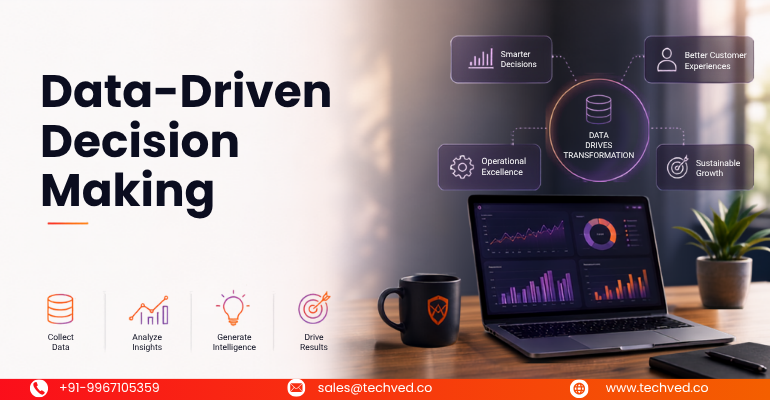
Data-Driven Decision-Making: The Overlooked Foundation of Digital Transformation
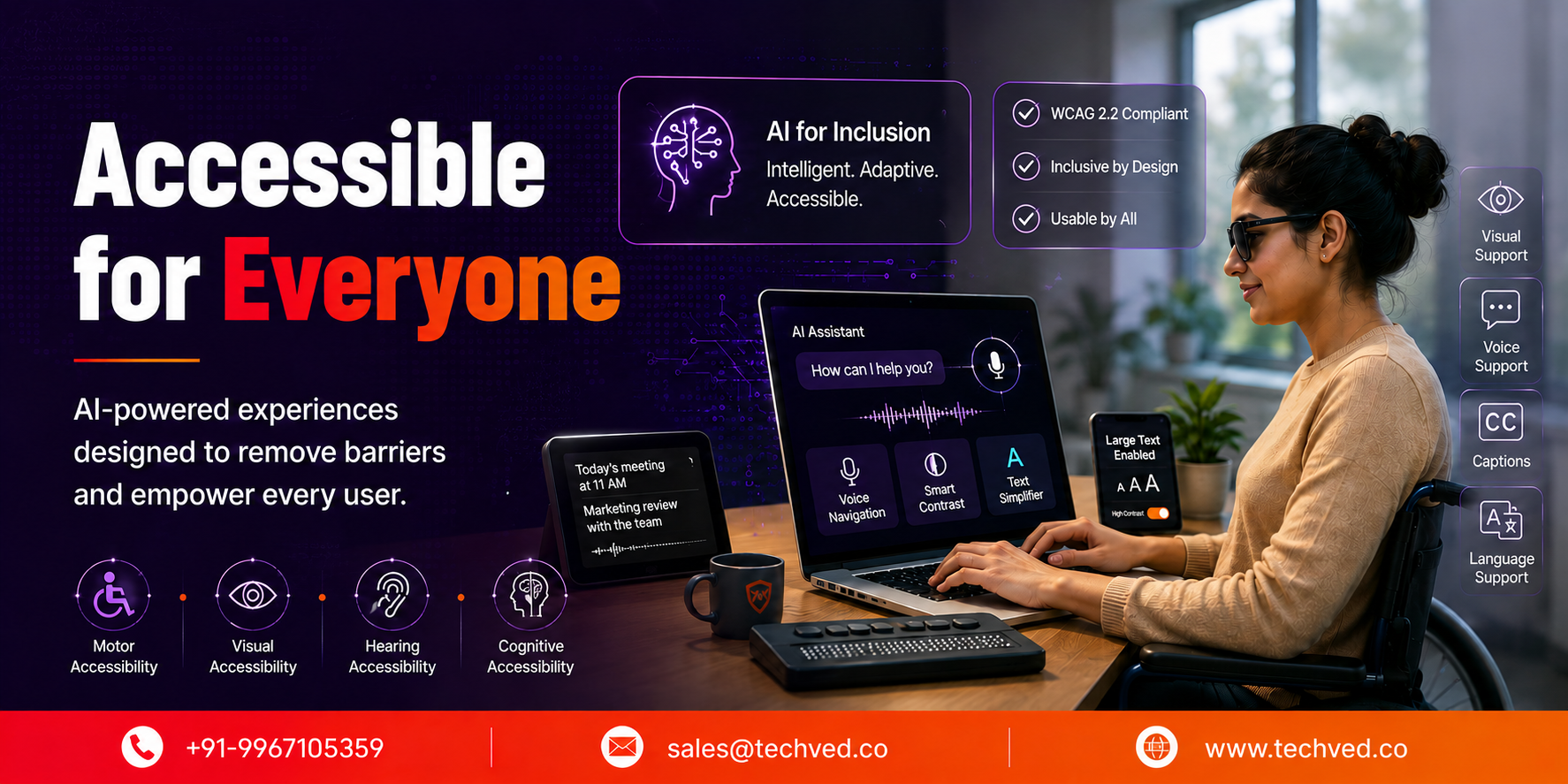
Accessibility in the Age of AI: Designing Inclusive Intelligent Experiences
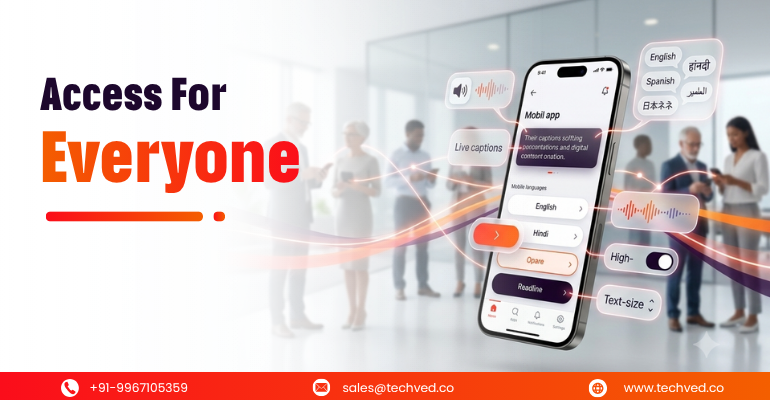
Inclusive Mobile Design: Building Accessible Apps for Global Users

Anticipatory UX: Designing User Experiences That Predict Intent
Safe Innovation: Implementing AI Chatbots with Strict Data Privacy Guardrails

DPDP 2025 Readiness: Building Credible Platforms for a Data-First World

The Trust Economy: Viewing Cybersecurity as a Growth Strategy
Written By
Jay Anthony
Marketing Head
He led efforts to develop a fully integrated marketing communications plan and growing team. He is responsible for successful corporate re-brand and update of all branded assets.

Stay up-to-date with
all new market trends and
happenings
 #DataDrivenDecisionMaking #DigitalTransformation #EnterpriseAnalytics #BusinessIntelligence #TECHVED #TECHVEDConsulting
Data-Driven Decision-Making: The Overlooked Foundation of Digital Transformation
#Accessibility #DigitalAccessibility #InclusiveDesign #CustomerExperience #DigitalTransformation #EnterpriseAI #TECHVED #TECHVEDConsulting #ExperienceEngineering
Accessibility in the Age of AI: Designing Inclusive Intelligent Experiences
#InclusiveMobileDesign #MobileAccessibility #DigitalAccessibility
Inclusive Mobile Design: Building Accessible Apps for Global Users
From Ideation To Digital Transformation
We take care of all your needs


