

- Home
- Services
- Automated Translation
- TECHVED AI
- Case studies
- CLIENTS
- More

Let's get started
We believe in advancing your business growth with innovative ideations and strategies
Get In Touch


 Back
BackWhat Modern Mobile App Development Really Requires in 2026 and Where Most Businesses Go Wrong
#MobileAppDevelopment #AppDevelopment2026

Jay Anthony
3 February 2026 | 8 min read
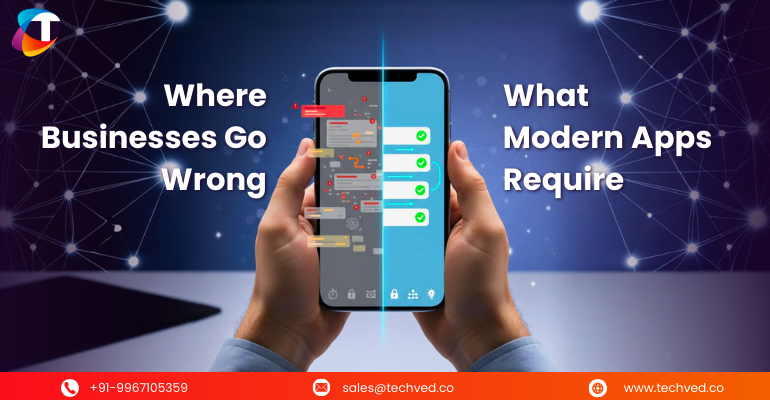
You open a food delivery app to order food. It takes too long to load, interface seems clunky and the menu feels confusing.
You close it and open another app instead.
That’s the result of businesses treating mobile app development like a checkbox exercise rather than a strategic investment.
In 2026, users expect more than functionality. They want experiences that feel native, intelligent and effortless. Yet most companies still approach mobile development services with outdated assumptions and end up with poor retention, negative reviews and wasted budgets.
The Real Cost of Getting Mobile Wrong
Too many businesses rush into development without understanding what mobile application services need to deliver in today's ecosystem. They focus on features while ignoring performance. They design for desktops and adapt for mobile instead of adopting a compliant mobile-first strategy from day one.
The result? Apps that look professional in demos but frustrate users in real scenarios.
Modern mobile app development company partners know this. They understand that success isn't only about launching fast. It's about launching right with a solid mobile app implementation plan that accounts for platform requirements, user behaviour and long-term scalability.
The Reality of Mobile App Development in 2026
Performance isn't negotiable
Users expect 2-3 second load times. Anything slower feels broken. Mobile solutions services must prioritize speed optimization and lightweight architecture from the start.
AI integration is standard
Personalized recommendations and predictive features aren't premium additions but basic expectations. Apps without intelligent automation feel outdated.
Cross-platform consistency with native feel
Your app must work seamlessly across iOS, Android and tablets while feeling native to each platform. This demands mobile app design company expertise in platform-specific guidelines without duplicating development effort.
Privacy and security by design
Users are increasingly aware of data handling. Mobile application trends show that permission transparency, encryption and minimal data collection are essential, not optional.
Accessibility isn't an afterthought
Inclusive design means apps that work for everyone. Screen reader compatibility, adjustable text and alternative navigation are validated through mobile usability testing at every stage.
Where Most Businesses Get It Wrong
Starting with features instead of users
The best mobile development services start with research, not guesswork. Understanding user journeys before coding prevents expensive pivots.
Skipping platform-specific optimization
Each platform like iOS and Android has unique interaction patterns and technical requirements. Ignoring these creates experiences that feel off regardless of functionality.
Treating development as one-and-done
Apps require ongoing maintenance, performance monitoring and feature evolution. The mobile app implementation plan must include post-launch support, analytics and continuous improvement.
Ignoring emerging contexts
Mobile apps for game tech, mobile AR development and wearable integration are reshaping mobile experiences. Ignoring these contexts means building apps that feel limited.
Underestimating testing requirements
Real devices behave differently than simulators. Mobile usability testing on actual hardware across OS versions and network conditions catches issues before they become one-star reviews.
Building Mobile Solutions That Last
Success in 2026 requires a different approach.
Start with a clear mobile app implementation plan that defines success metrics beyond downloads. Retention, engagement and user satisfaction matter more than install numbers.
Partner with mobile solutions services teams that prioritize discovery and validation phases. The best mobile app development company challenges assumptions and demands user research before starting development.
Design for mobile contexts first. A compliant mobile-first strategy means thinking about thumb zones, one-handed use and interrupted attention spans from the initial wireframes.
Build with scale in mind. Your first version doesn't need every feature, but the architecture should support growth without requiring rebuilds.
Final Thoughts
Mobile app development in 2026 is about understanding what users genuinely need and building solutions that respect their time, privacy and intelligence.
The businesses that succeed are the ones treating mobile applications as a strategic platform, not a tactical project. They invest in proper mobile application services that emphasize research, testing and iteration over rushing to market.
TECHVED specializes in mobile solutions and technology built around user needs and business goals. Our approach combines strategic planning, expertise and comprehensive services to create mobile apps that users would love to keep.
Ready to build mobile experiences that actually work? Connect with TECHVED to explore how thoughtful mobile app development drives measurable results.
FAQs
What makes mobile app development different in 2026?
Modern mobile app development focuses on intelligence, compliance, performance and experience rather than features alone.
Why do businesses fail in mobile app projects?
Most fail due to poor strategy, lack of mobile usability testing and weak alignment between design and engineering.
How important is mobile-first strategy today?
A compliant mobile-first strategy is critical as users, regulators and platforms expect privacy, performance and accessibility by default.
Do mobile apps still need updates after launch?
Yes, successful mobile application services treat launch as the beginning, using data and AI to continuously improve.
How does TECHVED support mobile app success?
TECHVED combines strategy design AI and engineering to deliver scalable, secure and future ready mobile experiences.
Most Popular
Data-Driven Decision-Making: The Overlooked Foundation of Digital Transformation
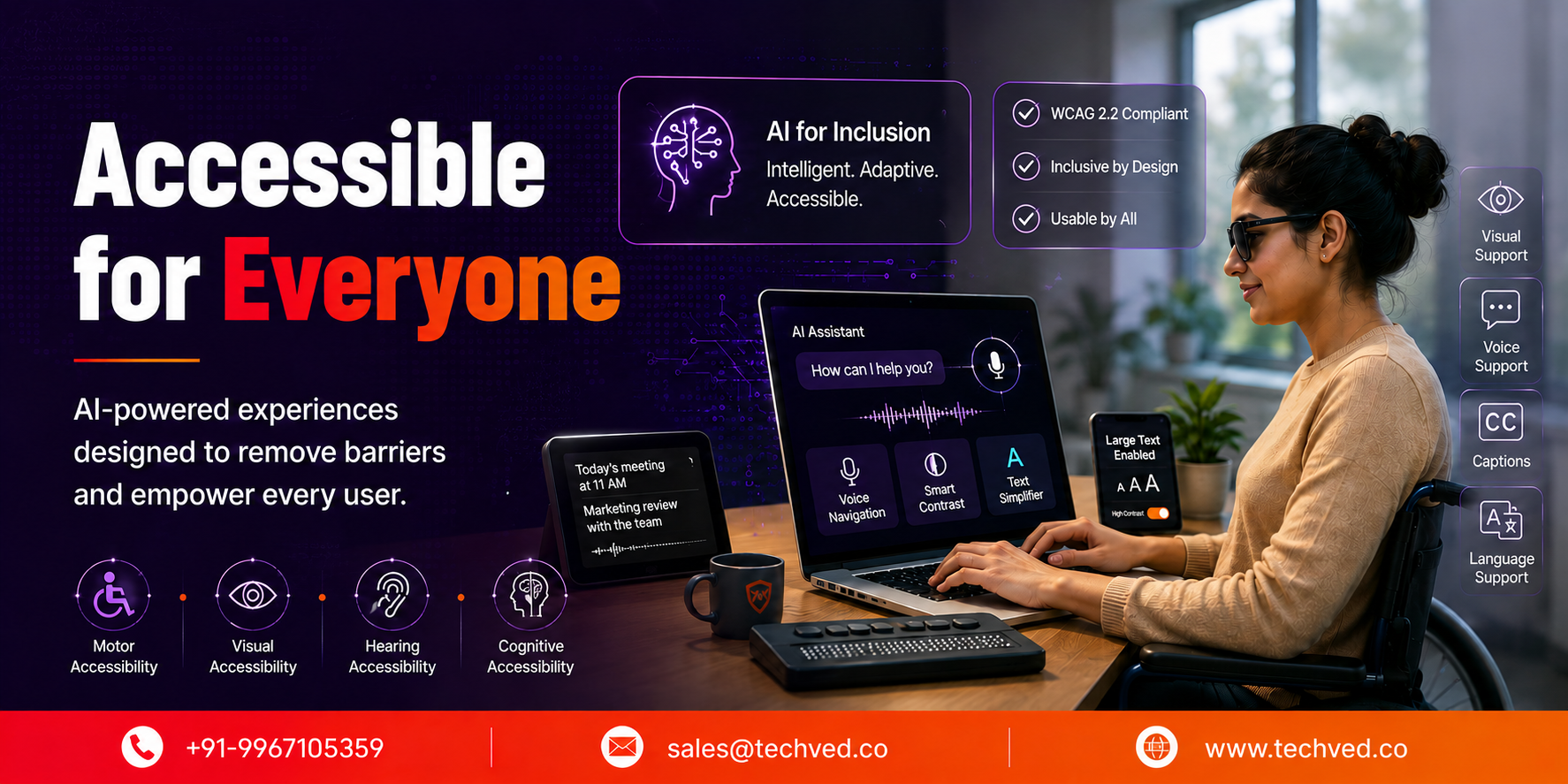
Accessibility in the Age of AI: Designing Inclusive Intelligent Experiences

Inclusive Mobile Design: Building Accessible Apps for Global Users

Anticipatory UX: Designing User Experiences That Predict Intent

Safe Innovation: Implementing AI Chatbots with Strict Data Privacy Guardrails

DPDP 2025 Readiness: Building Credible Platforms for a Data-First World

The Trust Economy: Viewing Cybersecurity as a Growth Strategy
Written By
Jay Anthony
Marketing Head
He led efforts to develop a fully integrated marketing communications plan and growing team. He is responsible for successful corporate re-brand and update of all branded assets.

Stay up-to-date with
all new market trends and
happenings
 #DataDrivenDecisionMaking #DigitalTransformation #EnterpriseAnalytics #BusinessIntelligence #TECHVED #TECHVEDConsulting
Data-Driven Decision-Making: The Overlooked Foundation of Digital Transformation
#Accessibility #DigitalAccessibility #InclusiveDesign #CustomerExperience #DigitalTransformation #EnterpriseAI #TECHVED #TECHVEDConsulting #ExperienceEngineering
Accessibility in the Age of AI: Designing Inclusive Intelligent Experiences
#InclusiveMobileDesign #MobileAccessibility #DigitalAccessibility
Inclusive Mobile Design: Building Accessible Apps for Global Users
From Ideation To Digital Transformation
We take care of all your needs


