

- Home
- Services
- Automated Translation
- TECHVED AI
- Case studies
- CLIENTS
- More

Let's get started
We believe in advancing your business growth with innovative ideations and strategies
Get In Touch


 Back
BackThe AI Lens: Automating Visual Saliency Analysis for High-Conversion Eye Tracking Research
#AIEyeTracking #VisualSaliency #ConversionOptimization

Jay Anthony
15 May 2026 | 8 min read
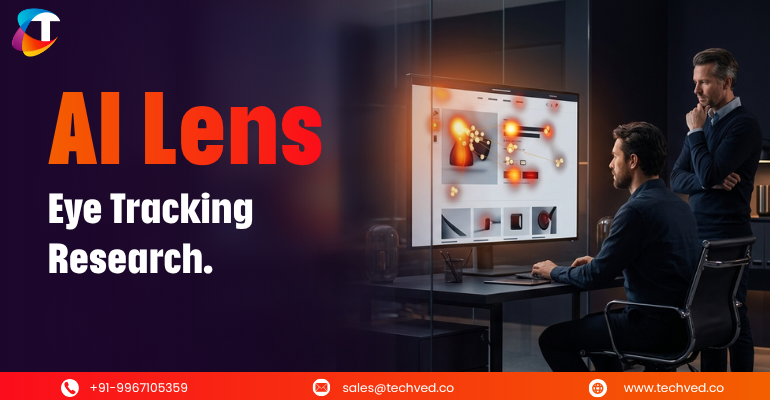
Imagine you are standing in a crowded grocery aisle searching for a specific brand of coffee. Your eyes dart across dozens of colorful packages before finally locking onto the one you want. This split-second decision is the result of your brain processing thousands of visual cues. For digital businesses, capturing that specific moment of focus is the difference between a bounce and a sale.
Integrating AI eye tracking into your digital strategy allows you to see through the eyes of your customers without the high cost of traditional lab studies. By using AI in UX research, brands can now predict gaze patterns instantly and ensure their most important information is never missed. This shift toward AI-powered usability testing provides actionable data that transforms how we build digital products.
What Is AI Eye Tracking and Visual Saliency Analysis?
AI eye tracking refers to predictive software that forecasts human visual attention without physical hardware or test participants. It uses computational saliency models trained on millions of real eye-tracking data points from diverse user studies.
Visual saliency analysis is the process of identifying which elements in a visual scene are most likely to attract human attention. Saliency maps visualize these attention patterns and have become an essential tool in UX analysis, informing layout decisions, visual hierarchy, and the placement of critical interface elements.
Many platforms use models trained on extensive eye-tracking data from university studies and proprietary research conducted by neuroscientists, psychologists, and UX researchers. Instead of measuring actual user behavior, these tools forecast how likely elements are to attract attention in the first 2–3 seconds, which is known as instant attention.
The Science Behind Predictive Eye Tracking
AI-powered eye tracking models are built on three core technologies:
- Eye-Tracking Datasets- AI models are trained on millions of eye-tracking studies revealing how humans naturally view images and interfaces. This includes patterns like F-pattern scanning, Z-pattern scanning, left-side visual dominance, and facial recognition preference.
- Computer Vision Analysis- The system analyzes every pixel of your page, identifying contrast ratios, typography weight, image focal points, CTA prominence, spatial grouping, and cognitive load.
- Predictive Behavioral Modeling- Finally, the AI aligns visual analysis with behavioral outcomes, creating a conversion probability map that predicts whether users will scroll, click, bounce, or hesitate.
Why Traditional Eye Tracking Research Fails at Scale
Traditional eye tracking research requires expensive hardware, controlled labs, and weeks of participant recruitment. A single study might cost thousands of dollars and deliver results after months. By then, your campaign timeline has moved on.
Manual eye tracking service providers face inherent scalability constraints. You cannot test 50 design variants. You cannot iterate rapidly. You learn about user attention after designs are already live or campaigns are already running.
Predictive AI heatmaps solve this by delivering instant insights with zero traffic, zero waiting for analytics, and zero gambling on your ad spend.
AI-Powered Usability Testing at Scale
AI-powered usability testing removes the bottlenecks that slowed eye tracking research. Speed matters in competitive markets. Waiting weeks for lab results kills momentum.
The new workflow looks like this:
Upload creative assets to the AI eye tracking platform
Receive predictive heatmaps and gaze path visualizations instantly
Compare multiple variants before development begins
Prioritize fixes that actually capture attention
Validate with live users only for final confirmation
This hybrid approach preserves rigor while accelerating delivery. AI in UX research does not replace human participants. It filters out poor options early, so live testing focuses on strong contenders.
Visual Saliency Analysis for Conversion Optimization
Visual saliency analysis identifies which design elements capture attention first, which get noticed eventually and which are overlooked completely.
Key insights from AI eye tracking:
- First fixation prediction: What users see within 250ms determines engagement
- Attention hotspots: Which elements dominate visual processing
- Ignored regions: Important content getting no visual attention
- Scan path analysis: How eyes move through layouts
- Comparative analysis: Attention differences across design variations
Conversion optimization research using these insights reveals why some designs perform better. If CTAs don't receive visual attention, no amount of copywriting improves conversion.
Measuring Visual Optimization Impact
Connect attention insights to business metrics. Track whether designs with optimized visual attention actually improve conversion rates. Visual saliency analysis should predict performance. Validate through A/B testing.
Common improvements from attention optimization:
- 15-30% conversion increases from CTA attention optimization
- 25-40% reduction in bounce rates from improved visual hierarchy
- 20-35% engagement improvements from attention-guided content placement
These outcomes justify eye tracking research investment, whether through AI prediction or traditional methods.
Final Thoughts
AI eye tracking democratizes visual saliency analysis that previously required expensive equipment and specialized expertise.
Eye tracking research insights become accessible during iterative design rather than reserved for validation of finished products. This enables conversion optimization research grounded in attention mechanics.
TECHVED delivers AI-powered usability testing integrating AI eye tracking with comprehensive optimization strategies. Our visual attention analysis approach combines computational predictions with business outcome focus to improve conversion through optimized visual design.
Ready to understand what captures attention in your designs? Connect with TECHVED for AI eye tracking analysis that reveals visual performance opportunities.
FAQs
What is AI eye tracking? AI eye tracking is predictive software that forecasts human visual attention using computational saliency models trained on real eye-tracking data. It generates attention heatmaps without physical hardware or test participants.
How does visual saliency analysis improve conversions? Visual saliency analysis identifies which design elements attract attention and which get ignored. By placing CTAs and key messages in predicted high-attention zones, you increase visibility and improve conversion rates before launch.
What is the difference between AI eye tracking and traditional eye tracking research? Traditional eye tracking research requires lab equipment and live participants, costing thousands per study. AI eye tracking delivers predictive heatmaps in seconds without participants or hardware, enabling rapid iteration.
Can AI eye tracking replace live usability testing? No. Predictive eye tracking forecasts attention and visibility only. It does not measure emotions, recall, or intent. It is best used as an early-stage diagnostic before moving into high-stakes live validation.
How accurate is AI eye tracking? Research shows predictive tools like AdGazer achieve 83 percent correlation accuracy between AI predictions and actual human gaze patterns. Accuracy continues improving as models train on larger datasets.
Most Popular
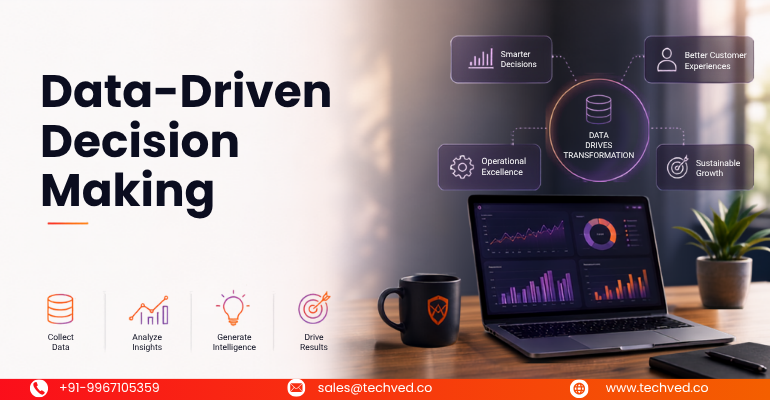
Data-Driven Decision-Making: The Overlooked Foundation of Digital Transformation
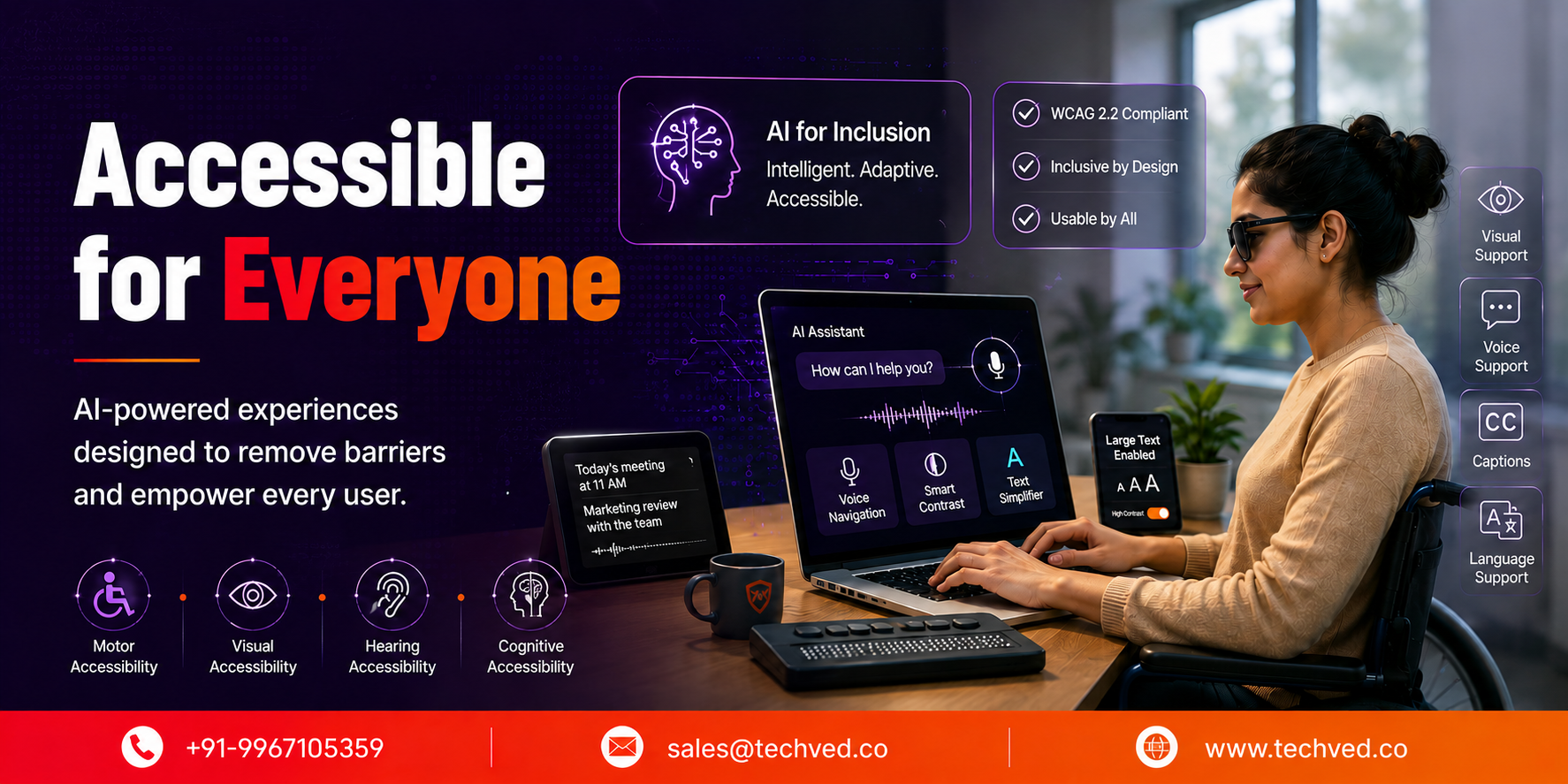
Accessibility in the Age of AI: Designing Inclusive Intelligent Experiences

Inclusive Mobile Design: Building Accessible Apps for Global Users
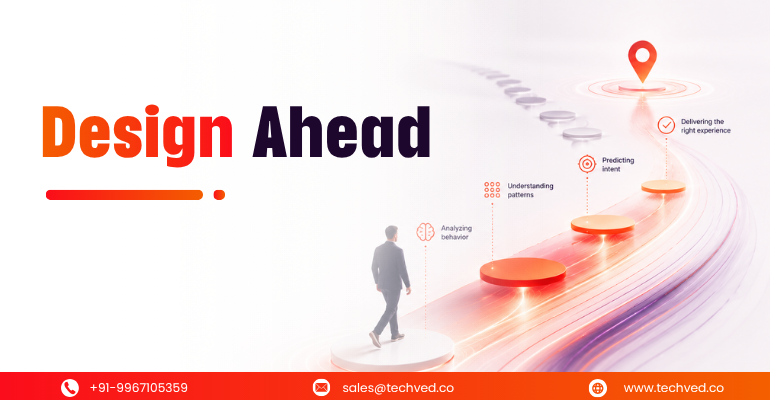
Anticipatory UX: Designing User Experiences That Predict Intent

Safe Innovation: Implementing AI Chatbots with Strict Data Privacy Guardrails

DPDP 2025 Readiness: Building Credible Platforms for a Data-First World

The Trust Economy: Viewing Cybersecurity as a Growth Strategy
Written By
Jay Anthony
Marketing Head
He led efforts to develop a fully integrated marketing communications plan and growing team. He is responsible for successful corporate re-brand and update of all branded assets.

Stay up-to-date with
all new market trends and
happenings
 #DataDrivenDecisionMaking #DigitalTransformation #EnterpriseAnalytics #BusinessIntelligence #TECHVED #TECHVEDConsulting
Data-Driven Decision-Making: The Overlooked Foundation of Digital Transformation
#Accessibility #DigitalAccessibility #InclusiveDesign #CustomerExperience #DigitalTransformation #EnterpriseAI #TECHVED #TECHVEDConsulting #ExperienceEngineering
Accessibility in the Age of AI: Designing Inclusive Intelligent Experiences
#InclusiveMobileDesign #MobileAccessibility #DigitalAccessibility
Inclusive Mobile Design: Building Accessible Apps for Global Users
From Ideation To Digital Transformation
We take care of all your needs


