

- Home
- Services
- Automated Translation
- TECHVED AI
- Case studies
- CLIENTS
- More

Let's get started
We believe in advancing your business growth with innovative ideations and strategies
Get In Touch


 Back
BackInclusive Mobile Design: Building Accessible Apps for Global Users
#InclusiveMobileDesign #MobileAccessibility #DigitalAccessibility

Jay Anthony
7 July 2026 | 4 min read

Imagine opening an app to book a cab service, but the text is unreadable, navigation is confusing or important details are difficult to access. For millions of users worldwide, these small design gaps create everyday digital barriers. This is why Inclusive Mobile Design has become essential for creating mobile experiences that work for everyone.
Modern users interact with apps across different abilities, languages, devices and environments. Inclusive Mobile Design ensures that technology adapts to people instead of expecting people to adapt to technology. It starts from the actual, imperfect and beautifully diverse ways people interact with their devices every day.
What Inclusive Mobile Design Really Means
Mobile accessibility is often thought of as something you do for users with disabilities. That mindset misses the bigger picture.
Universal design principles serve everyone. Larger touch target size guidelines help people with motor impairments and rushed commuters equally. Strong color contrast ratio mobile apps help users with visual impairments and anyone in bright sunlight. One-handed mobile navigation design serves parents carrying children as much as it serves amputees.
Inclusive UX recognizes that designing for the edges improves the center. Always.
The Business Case for Accessible App Design
Organizations often treat Accessible App Design as compliance cost. This is a wrong perception. Over one billion people worldwide experience significant disability and their spending power exceeds thirteen trillion dollars. When you exclude them, you leave money on the table that competitors will happily collect.
Beyond direct revenue, Inclusive UX improves metrics for everyone. Larger touch targets reduce errors for all users. Clear contrast improves readability in all lighting conditions. Simple navigation reduces cognitive load for all ages. Digital Accessibility is performance optimization disguised as social responsibility.
Core Principles That Make the Difference
Mobile UX best practices for inclusive design come down to a focused set of decisions made early in the process.
Perceivable- Information must be presentable in ways all users can perceive. This means text alternatives for images, captions for audio and sufficient color contrast.
Operable- Users must be able to operate all interface components. Touch targets should be at least 44×44 pixels. Functions must work without touch via voice or keyboard.
Understandable- Information and operation must be understandable. Screens should follow predictable layouts.
Robust- Content must work with current and future assistive technologies like screen readers.
WCAG compliance (Web Content Accessibility Guidelines) is the global benchmark. The European Accessibility Act, effective June 2025, now requires mobile apps in banking, e-commerce and transportation to meet these standards.
Practical Implementation Steps
Building accessible apps requires a systematic approach:
- Start early- Embed inclusive mobile design in the planning stage rather than after implementation
- Test with real users- Include people with disabilities in usability testing
- Use automated tools- These catch 20-40% of issues but cannot replace human testing
- Train your team- Build internal expertise in mobile accessibility
- Follow WCAG- Make Level AA your baseline standard
Testing Is Where Accessibility Becomes Real
Design intent and user reality often diverge.
Accessibility testing should include real devices, real assistive technologies and real users with diverse needs. VoiceOver on iOS behaves differently from TalkBack on Android. Screen magnification reveals layout breaks automated tools miss entirely.
An app accessibility checklist is a starting point, not an endpoint.
TECHVED builds accessibility testing into every phase of mobile development, treating it as quality assurance rather than a final audit. This means fewer surprises and more confidence at launch.
Implementation Without Compromise
Inclusive mobile design isn't a constraint on creativity. It's a commitment to building things that actually work for real people in real situations.
The apps winning globally are the ones designed with the full range of human experience in mind from day one. UX accessibility is not the last slide in a design deck. It's the foundation the entire experience sits on.
TECHVED partners with product teams to embed inclusive mobile design into workflows through research, design and accessibility testing that scales across global markets.
Ready to build apps that truly work for everyone? Connect with TECHVED to start your inclusive mobile design journey.
FAQs
What is inclusive mobile design?
Inclusive mobile design creates apps that work for users across different abilities, contexts, devices and geographies by applying universal design principles from the earliest stage of development.
What is WCAG compliance for mobile apps?
WCAG compliance refers to the Web Content Accessibility Guidelines that define minimum standards for perceivability, operability, understandability and robustness across digital interfaces including mobile applications.
How does accessibility testing work for apps?
Accessibility testing combines automated scanning, manual review and testing with assistive technologies like screen readers and voice navigation to identify barriers real users face.
Is inclusive UX only for users with disabilities?
No. Inclusive UX improves experiences for everyone including users in challenging environments, older adults, non-native speakers and anyone using a device in non-ideal conditions.
Where should inclusive design begin in the product process?
Mobile UX best practices recommend starting digital accessibility planning during research and wireframing so accessibility is designed in rather than bolted on.
Most Popular
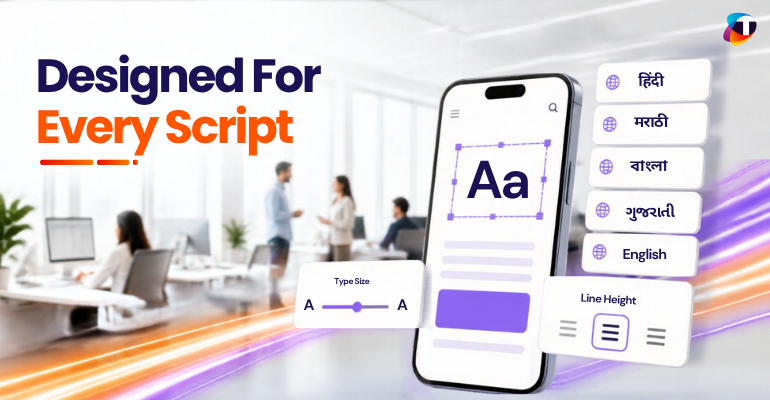
Multilingual UX for Indic Scripts: Where Regional Language Products Quietly Break

Data-Driven Decision-Making: The Overlooked Foundation of Digital Transformation
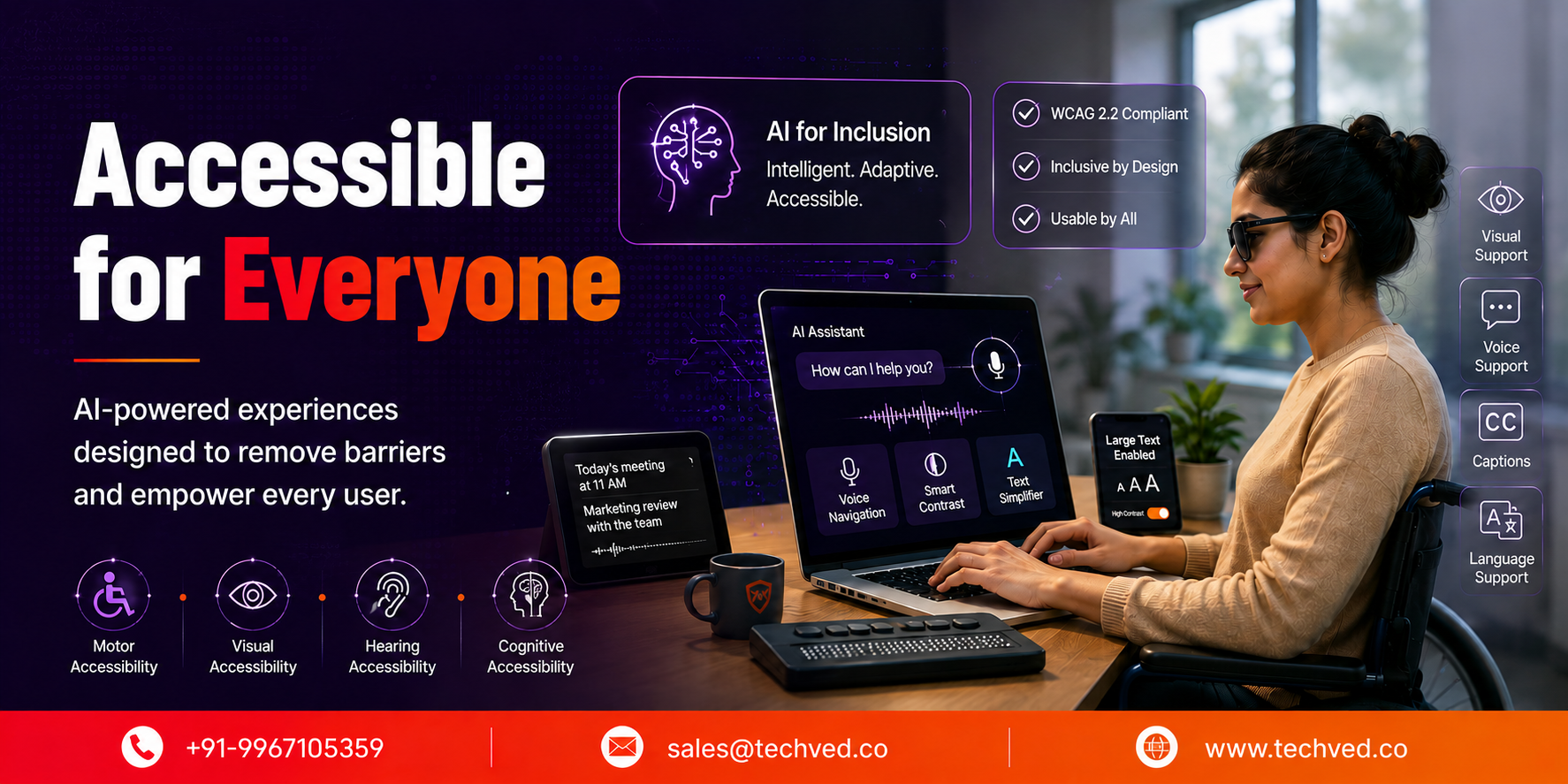
Accessibility in the Age of AI: Designing Inclusive Intelligent Experiences

Anticipatory UX: Designing User Experiences That Predict Intent

Safe Innovation: Implementing AI Chatbots with Strict Data Privacy Guardrails

DPDP 2025 Readiness: Building Credible Platforms for a Data-First World

The Trust Economy: Viewing Cybersecurity as a Growth Strategy
Written By
Jay Anthony
Marketing Head
He led efforts to develop a fully integrated marketing communications plan and growing team. He is responsible for successful corporate re-brand and update of all branded assets.

Stay up-to-date with
all new market trends and
happenings
 #MultilingualUX #IndicScripts #RegionalLanguage #DesignSystems #DigitalAccessibility #TECHVED #TECHVEDConsulting
Multilingual UX for Indic Scripts: Where Regional Language Products Quietly Break
#DataDrivenDecisionMaking #DigitalTransformation #EnterpriseAnalytics #BusinessIntelligence #TECHVED #TECHVEDConsulting
Data-Driven Decision-Making: The Overlooked Foundation of Digital Transformation
#Accessibility #DigitalAccessibility #InclusiveDesign #CustomerExperience #DigitalTransformation #EnterpriseAI #TECHVED #TECHVEDConsulting #ExperienceEngineering
Accessibility in the Age of AI: Designing Inclusive Intelligent Experiences
From Ideation To Digital Transformation
We take care of all your needs


