

- Home
- Services
- AI Translation
- TECHVED AI
- Case studies
- CLIENTS
- More

Let's get started
We believe in advancing your business growth with innovative ideations and strategies
Get In Touch


 Back
BackThe Role of AI in Data Analytics: From Automation to Innovation
DataAnalyticsAndAI #AIinDataAnalytics #AI

Jay Anthony
14 November 2024 | 8 min read

We are now creating a lot of data, more than ever before; so much, in fact, that business in general cannot possibly handle it all by manpower. So comes AI, the technology behind the transformation of data analytics like no other. That means AI is not just crunching numbers. It finds out patterns, predicts trends and delivers innovative decisions that take businesses ahead of the pack. AI in data analytics is transforming how business firms acquire knowledge to make decisions, respond to changes in the market, and personalize their interactions with customers in retail, banking, health care, and any other industry.
Join us as we dive into how data analytics and AI are paving the way for even smarter, faster, and more insightful decision-making at companies across the globe.
Rapid Data Processing With AI-Powered Automatization
One important aspect of AI impacts in data analytics would be the automation impact. Data analytics and AI solutions make laborious work easier, allowing for the quicker collection, processing, and visualization of data. For instance, what used to take hours or days to accomplish by hand-through sorting and analyzing data sets-now should be able to be done in a matter of minutes using an AI tool. This speeds up the analysis of data and also minimizes the chances of human error, hence providing a more accurate basis for determining decisions.
AI automation helps businesses integrate multiple data sources into a unified data environment. Using tools provided by AI in data analysis, companies pull data from sources that spread it all out, automatically categorize and clean it, then make it available for analysis. A significant leap for data analytics services is this, and immediately affected will be whenever there's a breakdown in the reliability of getting a particular kind of information at the right time.
Predictive Analytics for Business: The Novel Way to Predict the Future
While AI is more predominant in the analysis of past data, it also enables predictive analytics, which has been a bedrock of data analytics for businesses. Predictive analytics can apply historical data and algorithms, including machine learning, to predict future outcomes. For example, using predictive models, a firm can predict future demand for certain products in retail and adjust stock accordingly. Predictive analytics by using AI has enabled banking businesses to predict market trends and identify risk and fraud.
Predictive analytics in business enables companies to make proactive decisions rather than reactive to market changes when they occur. All of this has resulted because AI-powered predictive tools that point towards insight into the behavior of customers and supply chain disruptions and even economic shifts position businesses one step ahead of possible challenges.
Generative AI for Business: New Directions in Customer Experience
Now, the generative AI kind of AI that produces original content comes into play within business analytics. It can facilitate the simulation of scenarios and potential solutions rather than being constrained to existent data. Generative AI for business is most useful when it comes to customer experience. For example, business firms can use generative AI to personalize recommendations, simulate customer service interactions to attain the best methods of engagement, and much more.
Generative AI in data analytics synthesizes huge amounts of data to create unique business insights not possible through conventional methods. Companies innovate faster because they can get ideas for new things, test outcomes, and refine strategies based on scenarios created by AI.
Real-Time Business Insights: Decision-making on the Fly
The business landscape is always in a state of change, so also the demand to make the right decisions at the right moment. With AI and data analytics these days, companies can react in real time to changes in the market, customer preferences, and operating issues. More agile decision-making environments occur due to the fact that the process of unfolding of trends or key metrics through real-time data analytics services are capable of tracking or monitoring.
For example, a retail business might utilize real-time data analytics to see sales and inventory levels in multiple regions; then it can adjust the price or even order restocked products in real-time. Other examples include AI-based data analysis tools in logistics or supply chain management, since for those industries, real-time insight is of primary importance for adjusting routes to reach destinations in the shortest time possible or to replenish inventory.
Improving Data Analytics for Business: From Efficiency to Innovation
[if !supportLists]Efficiency in Data Analytics with AI: Efficiency is the one top benefit that AI usage in data analytics brings. Algorithms have the ability to process large amounts of data much better than a human would. Importantly, AI algorithms go beyond processing and sorting data; they can actually detect what could be hidden correlations that humans cannot see immediately.
AI Data AnalysisFor Business Across Sectors: Data analytics and AI solutions don't limit any sector. From finance to healthcare, retail, to manufacturing, various sectors are bringing AI-driven data analytics to reality.
Future of AI in Data Analytics: What Should Business Do
Given that data analytics is projected to grow with AI at its core, India will be able to fully capitalize on the new developments, primarily because it has fast become a growth location for tech talent and innovation. However, it would continue to lead in AI-driven data analytics only if it continued to invest in developing infrastructures related to data, supported AI-related research. Data analytics implementation in business and AI-led solutions will enable Indian industries to be more agile and innovative, thus bringing it at par or even above global levels.
Conclusion
The switch from data analytics to AI solutions allows all businesses on the same board to establish informed decisions on time, personalize the experience of customers, and better predict trends before they occur. Data and analytics will be the role of the future for businesses-they will be more pertinent with AI at the core. Next-generation applications in generative AI for business, as well as real-time analytics, expand the scope of things that companies can consider and change over time. Whether it's banking, healthcare, or retail, the path AI is taking about in data analytics is changing how businesses can approach problems and new opportunities.
FAQs
What is the advantage of applying AI data analytics solutions in real-time?
Businesses can respond immediately to all trends, customer feedback, and problems in real-time AI data analytics. For example, in real-time analytics in banking, it can quickly pick fraud, or in retail, it will adjust your inventory according to what is currently demanded.
How does AI add value to the service and solutions for data analytics?
AI can make data analytic services smarter, faster, and more reliable. The complex sets of data can be processed, then patterns can be detected by the AI that may even escape human eyes in order to provide actionable insights, thereby strengthening such businesses with a more solid foundation for strategic decision-making processes.
What part does Artificial Intelligence play in data analytics?
Instead, AI creates possibilities for data automation, data pattern recognition, and prediction. For businesses AI brings the ability to sift rapidly and efficiently through vast quantities of information thereby allowing improved decisions and thus increased competitiveness.
In what ways does AI enhance Business Data Analytics?
Automation of the repetitive processes enhances the impact of business analytics by providing insights as the event unfolds, tendencies and even customized clients’ experiences. It does so because data analysis is made more effective by such.
Why do predictive analytics matter to businesses?
Predictive analytics helps businesses predict what's going to happen in the future and how the customer might behave. It may promote appropriate marketing strategies, optimize inventory, or help meet customer needs before they ever request it.
Most Popular

Multilingual UX for Indic Scripts: Where Regional Language Products Quietly Break
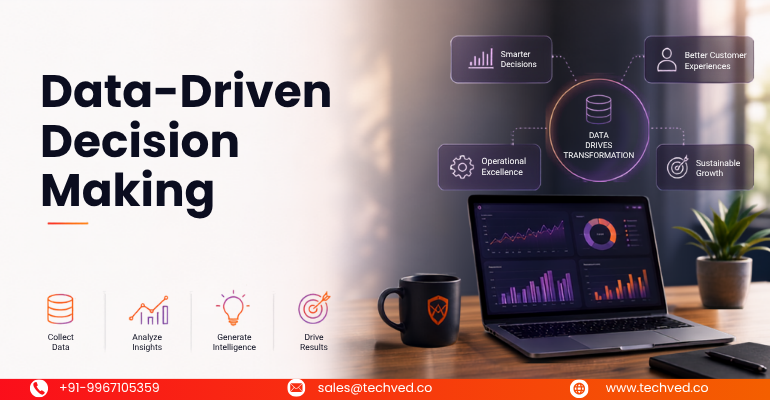
Data-Driven Decision-Making: The Overlooked Foundation of Digital Transformation
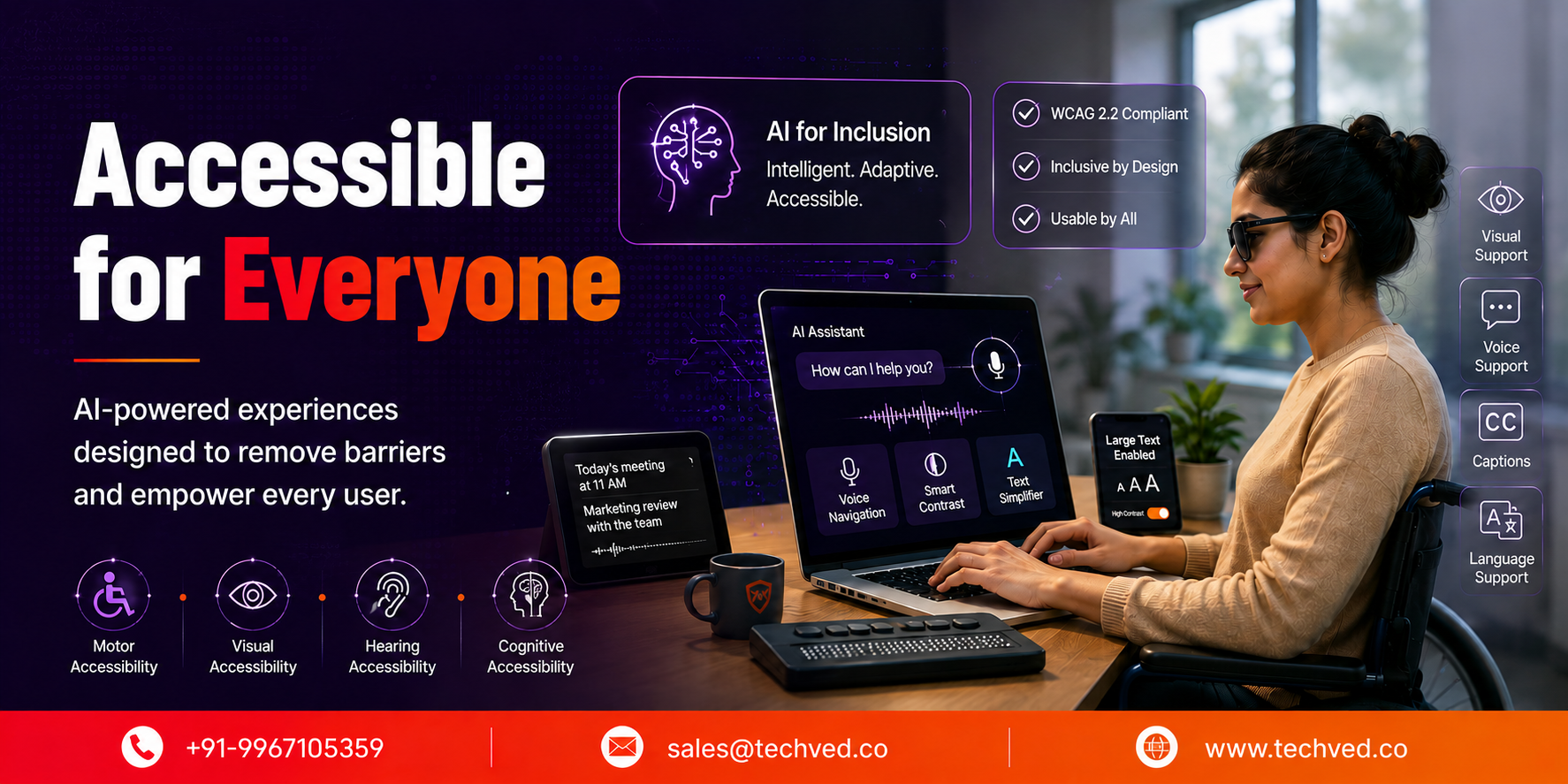
Accessibility in the Age of AI: Designing Inclusive Intelligent Experiences

Inclusive Mobile Design: Building Accessible Apps for Global Users

Anticipatory UX: Designing User Experiences That Predict Intent

Safe Innovation: Implementing AI Chatbots with Strict Data Privacy Guardrails

DPDP 2025 Readiness: Building Credible Platforms for a Data-First World
Written By
Jay Anthony
Marketing Head
He led efforts to develop a fully integrated marketing communications plan and growing team. He is responsible for successful corporate re-brand and update of all branded assets.

Stay up-to-date with
all new market trends and
happenings
 #MultilingualUX #IndicScripts #RegionalLanguage #DesignSystems #DigitalAccessibility #TECHVED #TECHVEDConsulting
Multilingual UX for Indic Scripts: Where Regional Language Products Quietly Break
#DataDrivenDecisionMaking #DigitalTransformation #EnterpriseAnalytics #BusinessIntelligence #TECHVED #TECHVEDConsulting
Data-Driven Decision-Making: The Overlooked Foundation of Digital Transformation
#Accessibility #DigitalAccessibility #InclusiveDesign #CustomerExperience #DigitalTransformation #EnterpriseAI #TECHVED #TECHVEDConsulting #ExperienceEngineering
Accessibility in the Age of AI: Designing Inclusive Intelligent Experiences
From Ideation To Digital Transformation
We take care of all your needs


