

- Home
- Services
- Automated Translation
- TECHVED AI
- Case studies
- CLIENTS
- More

Let's get started
We believe in advancing your business growth with innovative ideations and strategies
Get In Touch


 Back
BackMaximizing The Potential of Team Augmentation For Projects
#staffaugmentation, #teamaugmentation

Jay Anthony
1 April 2023 | 8 min read

Maximizing Potential of Team Augmentation For Projects
In our dynamic business environment, organizations are constantly seeking ways to remain competitive and agile in the face of changing market demands. One effective strategy for achieving this is through team augmentation, which involves adding external professionals to your project team to provide additional expertise, resources, and flexibility.
Staff augmentation can be particularly effective for projects with specialized or unique requirements that cannot be fulfilled with your existing in-house team. By leveraging the skills and experience of external experts, you can quickly and efficiently complete projects, while reducing the burden on your internal staff and freeing up resources for other initiatives.
However, to fully realize the benefits of staff augmentation, it's important to understand its potential and ways to maximize it. In this blog, we'll explore the key considerations and best practices for leveraging team augmentation to achieve project success. We'll also discuss common challenges and strategies for overcoming them so that you can confidently and effectively integrate external experts into your project team.
What do you mean by staff Augmentation?
Staff augmentation, also known as team augmentation, is a strategy for adding external professionals to your project team. These professionals, or "augmented" team members, can be hired on a temporary or long-term basis to supplement your in-house staff and provide additional expertise, resources, and flexibility.
Team augmentation can involve a range of professionals, including software developers, designers, project managers, quality assurance specialists, and more. These professionals can be sourced from a variety of locations, including local or remote talent pools, staffing agencies, or freelance platforms.
Staff augmentation differs from traditional outsourcing models, where an entire project or business function is outsourced to an external provider. With team augmentation, the external professionals are integrated into your existing project team and work alongside your internal staff, providing additional support and expertise as needed.
One key benefit of team augmentation is its flexibility. Organizations can quickly and easily adjust the size and composition of their project teams to meet changing demands, without the long-term commitments and overhead costs associated with hiring full-time employees.
Role of team augmentation in project management
Team augmentation plays a critical role in project management by providing organizations with the flexibility and resources needed to efficiently execute their projects. Whether it's adding new skills to your team, scaling up to meet tight deadlines, or filling in gaps in your staffing plan, team augmentation can help ensure that your project is completed on time and within budget.
One of the primary benefits of team augmentation in project management is its ability to quickly ramp up or down resources based on project requirements. For example, if a project requires additional resources to complete a specific phase, a team augmentation provider can quickly provide the necessary personnel to ensure that the project remains on schedule. This avoids the need for organizations to hire additional employees on a full-time basis, which can be costly and time-consuming.
Staff augmentation also enables project managers to quickly add specialized expertise to their teams. This can be particularly valuable for projects that require specialized skills, such as software development, data analytics, or project management. By leveraging the expertise of external professionals, organizations can quickly bring their projects up to speed and ensure that they are being executed using best practices and the latest tools and techniques.
Benefits of using staff augmentation to deliver projects within the deadline:
One of the most significant benefits of using staff augmentation in project management is the ability to deliver projects within the deadline.
Here are some ways in which team augmentation can help:
1. Increased workforce capacity
Staff augmentation provides access to a larger pool of resources, allowing for increased capacity and scalability. This means that project teams can take on more work and complete it within the given timeframe.
2. Flexibility
Team augmentation allows for flexibility in staffing, which means that project managers can adjust the team size and skillset based on the changing needs of the project. This flexibility ensures that the project stays on track and deadlines are met.
3. Specialized expertise
Staff augmentation provides access to specialized expertise that may not be available in-house. This increases the efficiency when it comes to the completion of the project as specialized expertise can help in resolving issues and avoiding potential delays.
4. Reduced hiring costs
Staff augmentation helps in reducing the cost of hiring as there is no need to hire full-time employees for the project. This means that the budget allocated for hiring can be used for other essential aspects of the project.
5. Improved time to market
With the help of team augmentation, the project team can complete the project quickly, leading to an improved time to market. This means that the product or service can be released in the market sooner, providing a competitive edge to the business.
Conclusion
In conclusion, staff augmentation has become a popular strategy for organizations to achieve success in project management. It is the process of hiring temporary team members to fill the skill gaps in the existing team, enabling organizations to complete their projects within a shorter timeline and with a higher level of quality.
In this blog, we have defined team or staff augmentation, discussed its role in project management, and highlighted the benefits of leveraging team augmentation to deliver projects within the deadline. By using team augmentation, organizations can access a wider talent pool, reduce hiring costs, increase flexibility, and reduce risks.
Overall, team augmentation is an effective strategy to manage projects and deliver them on time, within budget, and with the required level of quality. By adopting team augmentation, organizations can leverage the skills and expertise of professionals, overcome talent shortages, and successfully complete their projects.
FAQ
What are the challenges associated with staff augmentation in project completion?
While staff augmentation can bring many benefits to a project, there are also some challenges associated with it. One of the biggest challenges is ensuring effective communication and collaboration between the augmented team and the existing team. It's also important to manage the expectations of all team members and stakeholders to ensure everyone is on the same page. Additionally, finding the right balance between the augmented and existing teams can be a challenge, as well as ensuring that the augmented team is fully aligned with the project goals and objectives.
How can you measure the success of staff augmentation in project management?
To measure the success of staff augmentation in project management, you can use various metrics such as the quality and timeliness of deliverables, the effectiveness of communication and collaboration, and the satisfaction of team members and stakeholders. It's also important to track the impact of the augmented team on the overall project outcomes and business goals. Regular feedback and evaluation can help identify areas of improvement and ensure continuous growth and development.
What role do project managers play in staff augmentation?
Project managers play a crucial role in staff augmentation as they are responsible for managing the augmented team and integrating them into the existing project team. They must ensure effective communication and collaboration between team members, manage timelines and deadlines, and oversee the quality and accuracy of deliverables. Project managers must also identify any potential risks and issues related to staff augmentation and take necessary actions to mitigate them. Overall, project managers are essential in ensuring the success of staff augmentation in project management.
Most Popular

Data-Driven Decision-Making: The Overlooked Foundation of Digital Transformation
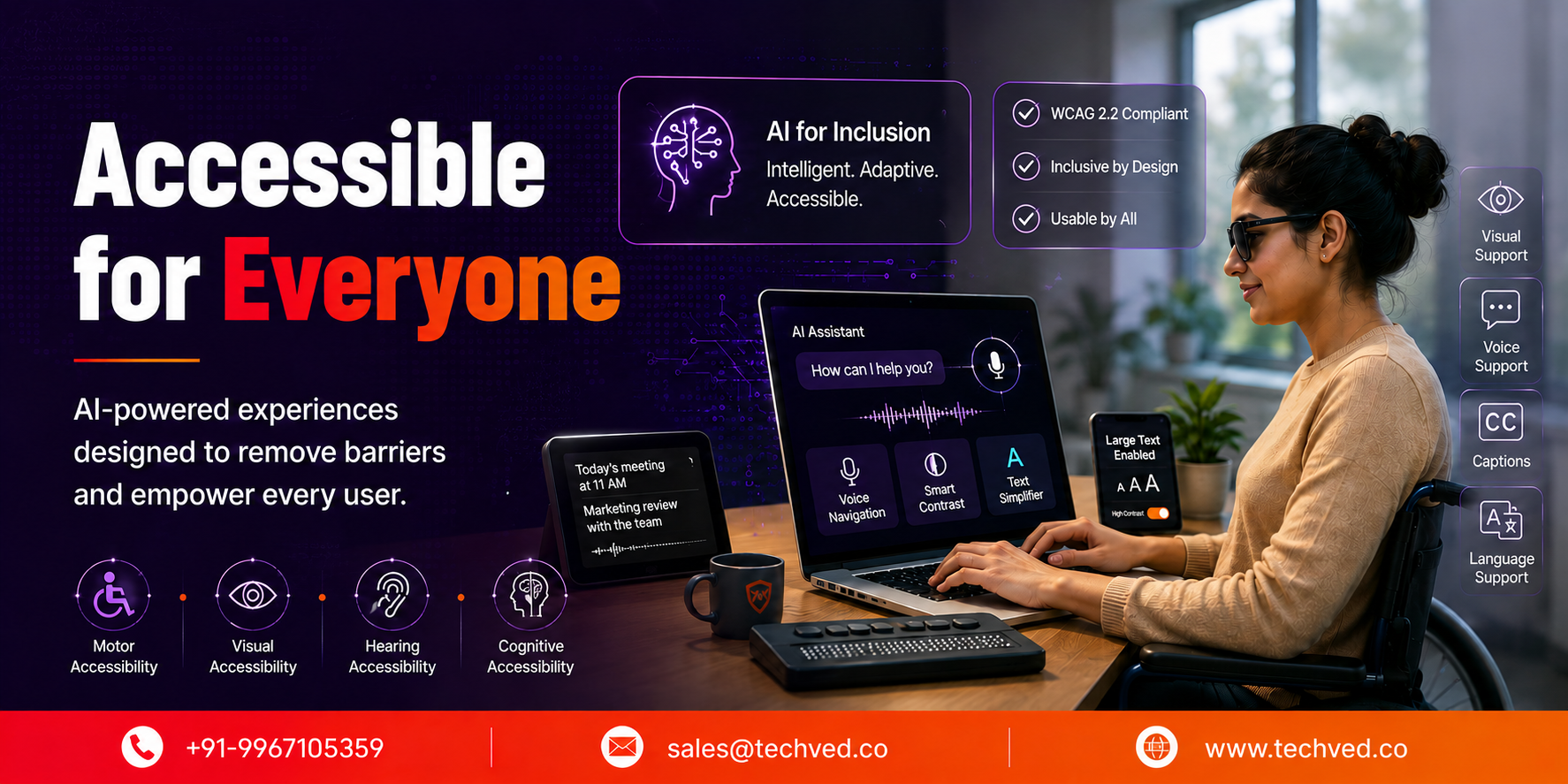
Accessibility in the Age of AI: Designing Inclusive Intelligent Experiences

Inclusive Mobile Design: Building Accessible Apps for Global Users

Anticipatory UX: Designing User Experiences That Predict Intent

Safe Innovation: Implementing AI Chatbots with Strict Data Privacy Guardrails

DPDP 2025 Readiness: Building Credible Platforms for a Data-First World

The Trust Economy: Viewing Cybersecurity as a Growth Strategy
Written By
Jay Anthony
Marketing Head
He led efforts to develop a fully integrated marketing communications plan and growing team. He is responsible for successful corporate re-brand and update of all branded assets.

Stay up-to-date with
all new market trends and
happenings
 #DataDrivenDecisionMaking #DigitalTransformation #EnterpriseAnalytics #BusinessIntelligence #TECHVED #TECHVEDConsulting
Data-Driven Decision-Making: The Overlooked Foundation of Digital Transformation
#Accessibility #DigitalAccessibility #InclusiveDesign #CustomerExperience #DigitalTransformation #EnterpriseAI #TECHVED #TECHVEDConsulting #ExperienceEngineering
Accessibility in the Age of AI: Designing Inclusive Intelligent Experiences
#InclusiveMobileDesign #MobileAccessibility #DigitalAccessibility
Inclusive Mobile Design: Building Accessible Apps for Global Users
From Ideation To Digital Transformation
We take care of all your needs


